
Fresh-Milled Sourdough Pizza
Prep
30 min
Bake
8 min
Total time
38 min
Hydration
70%

A 70% hydration sourdough pizza dough using freshly milled hard white wheat, bulk-fermented 4 hours then cold-fermented 24-48 hours for flavor and digestibility.
Key Takeaways
- Cold ferment 24-48 hours for the best blister and flavor
- High oven heat (500-550°F) on a preheated stone is non-negotiable
- Make 4 balls of 250 g each for 10-inch personal pies
- Hard white wheat keeps the crust light; add 10% rye for depth
- Stretch by hand — rolling deflates the airy edge
About this recipe
A chewy, blistered sourdough pizza crust made from freshly milled wheat with a 24-48 hour cold ferment for deep flavor.
Ingredients
- Freshly milled hard white wheat500 g
- Water350 g (70%)
- Active sourdough starter75 g
- Salt12 g
- Olive oil15 g
Instructions
- 1
Mix flour and water; autolyse 30 min.
- 2
Add starter, salt, oil. Mix smooth.
- 3
Bulk 4 hours at 75°F with 2 stretch-and-folds.
- 4
Divide into 4 balls, place in oiled container.
- 5
Cold ferment 24-48 hours.
- 6
Pull dough 2 hours before baking to warm up.
- 7
Stretch, top, bake at 550°F on stone 6-8 min.
home grain milling tutorial — hydration, gluten development, and grain choice tips that make this recipe work.
Learn about this grain: Hard White Wheat guide — flavor, milling notes, baking tips, and four in-depth guides on hydration, storage, and common mistakes. Or browse more Hard White Wheat recipes.
Learn a technique
All guides →- Cold Retard & Bulk for Fresh-Milled SourdoughHow to time and temperature-manage bulk fermentation and cold retard for fresh-milled sourdough to develop flavor without overproofing.
- Build & Maintain a Fresh-Milled Sourdough StarterA step-by-step guide to creating a robust whole-grain sourdough starter from scratch and maintaining it for weekly baking.
Related recipes
Browse all recipes →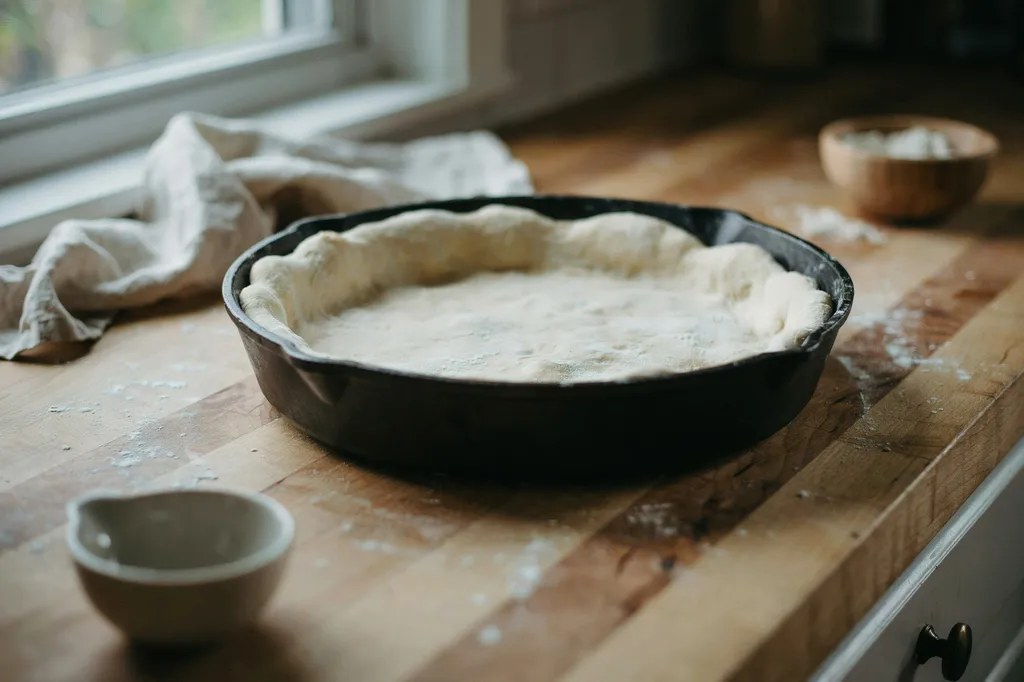
Deep Dish Pizza Dough
Baking with freshly milled hard white wheat flour transforms an everyday recipe into something extraordinary. Within minutes of milling, whole-grain flour is bursting with natural oils and a sweet wheaty aroma — the part that fades first once flour sits — and it still carries the whole berry: bran, germ, and endosperm. Commercial white flour has the bran and germ removed and is stabilized for months of shelf life — fresh milling skips all of that, so you bake with the whole grain and with the aroma still in it. Chicago-style deep dish demands a dough that's almost like a savory pastry — flaky, buttery, and sturdy enough to support a thick layer of cheese and chunky tomato sauce. Fresh-milled hard white wheat brings natural sweetness and tenderness that store-bought flour can't quite match, and a generous amount of olive oil and butter gives the crust its signature golden, slightly crisp edge. Plan to bake in a cast iron skillet or dedicated deep dish pan. The pan goes into a screaming-hot oven and the high sides slow-bake the toppings without burning the crust. Layer cheese first, sausage or veggies next, and chunky tomato sauce on top — counter-intuitive but it prevents a soggy bottom.
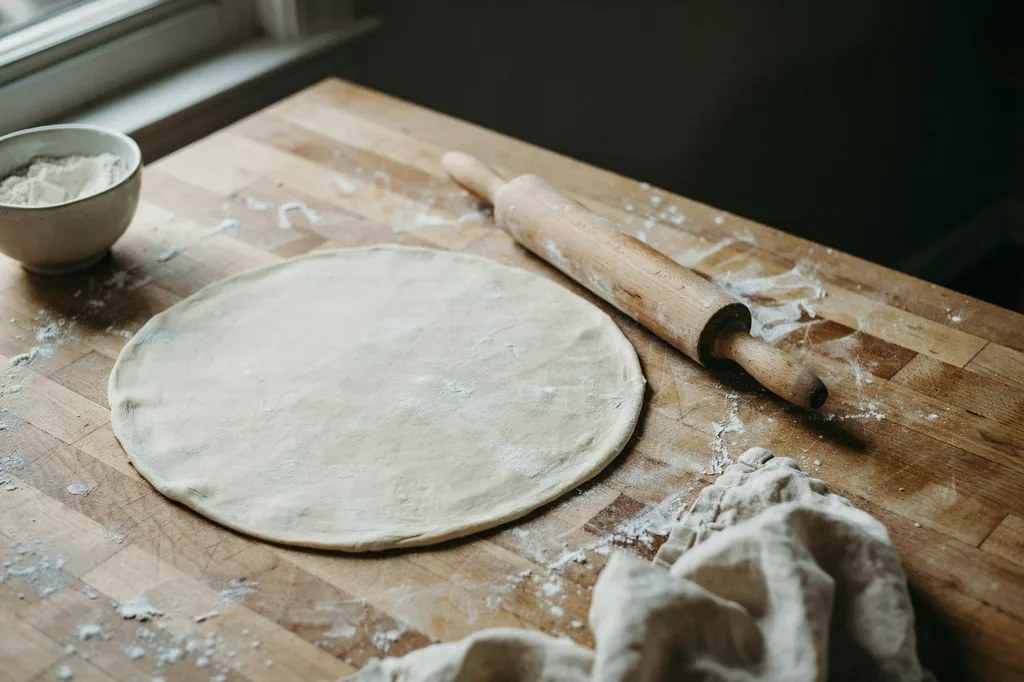
Thin Crust Pizza Dough
Baking with freshly milled hard white wheat flour transforms an everyday recipe into something extraordinary. Within minutes of milling, whole-grain flour is bursting with natural oils and a sweet wheaty aroma — the part that fades first once flour sits — and it still carries the whole berry: bran, germ, and endosperm. Commercial white flour has the bran and germ removed and is stabilized for months of shelf life — fresh milling skips all of that, so you bake with the whole grain and with the aroma still in it. Crisp on the bottom, chewy at the edges, and powerful enough to support generous toppings without becoming soggy — that's the goal of a great thin-crust pizza dough. Fresh-milled hard white wheat gives this dough a subtle nuttiness without the heaviness people associate with whole wheat. A cold overnight ferment unlocks the flavor and improves both texture and digestibility. This recipe makes two 12-inch pizzas. Plan ahead: the dough develops its best flavor with a 24–48 hour cold ferment, but you can also bake it the same day after a 90-minute bulk rise. For Neapolitan-style results, bake on a preheated steel or stone at the highest temperature your oven allows.
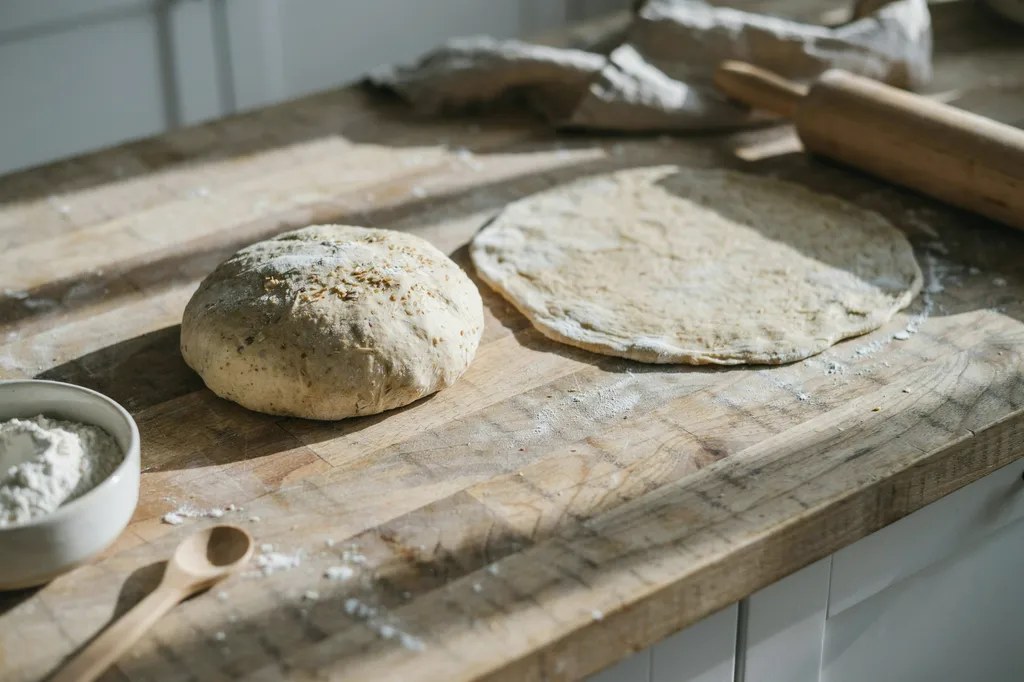
Fresh-Milled Pizza Dough
A 24-hour cold-fermented 100% fresh-milled pizza dough with crisp edges, a tender chew, and a deep wheaty flavor.
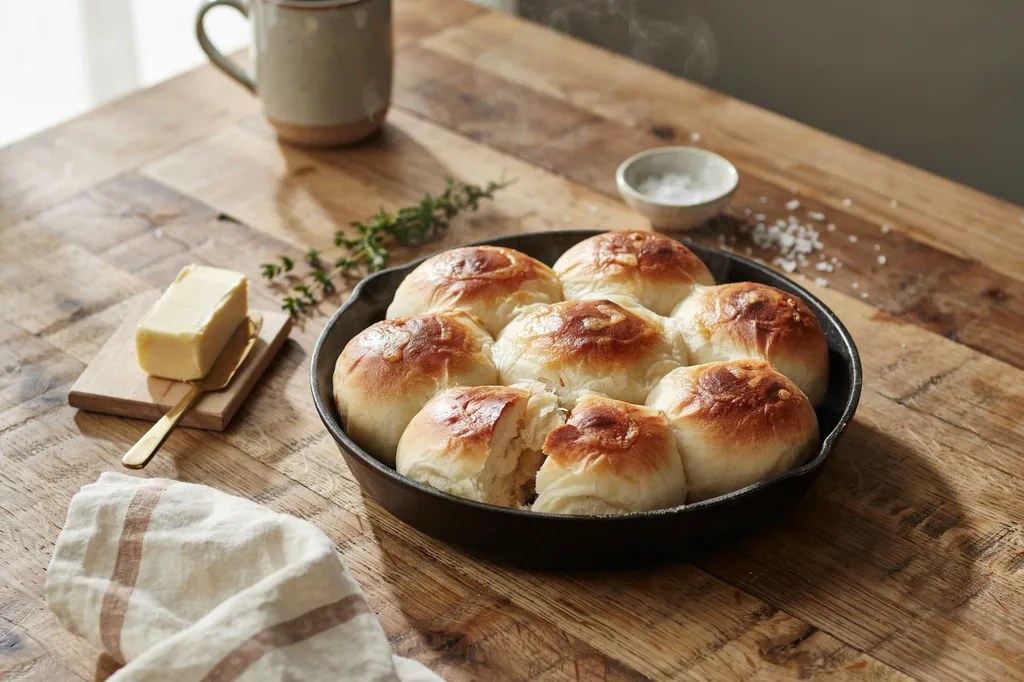
Sourdough Dinner Rolls
If you can bake a sourdough boule, you can bake sourdough dinner rolls — they just want a softer dough and a little enrichment. Butter, whole milk, and a touch of honey turn a workhorse sourdough into a holiday-table roll that pulls apart cleanly, smells like a bakery, and reheats beautifully. Fresh milled hard white wheat keeps the rolls feeling familiar to people who think they don't like whole wheat. The cold retard does double duty: it builds flavor that store-bought rolls cannot match, and it makes the timing flexible enough to work around dinner. A few habits make these rolls reliable: weigh the dough balls (the table will judge you if one is twice the size of another), brush with melted butter the moment they come out of the oven, and don't over-bake. Internal temperature of 195°F (90°C) is right — anything more and you lose the tenderness that makes them magical.
Beginner Fresh Milled Sourdough
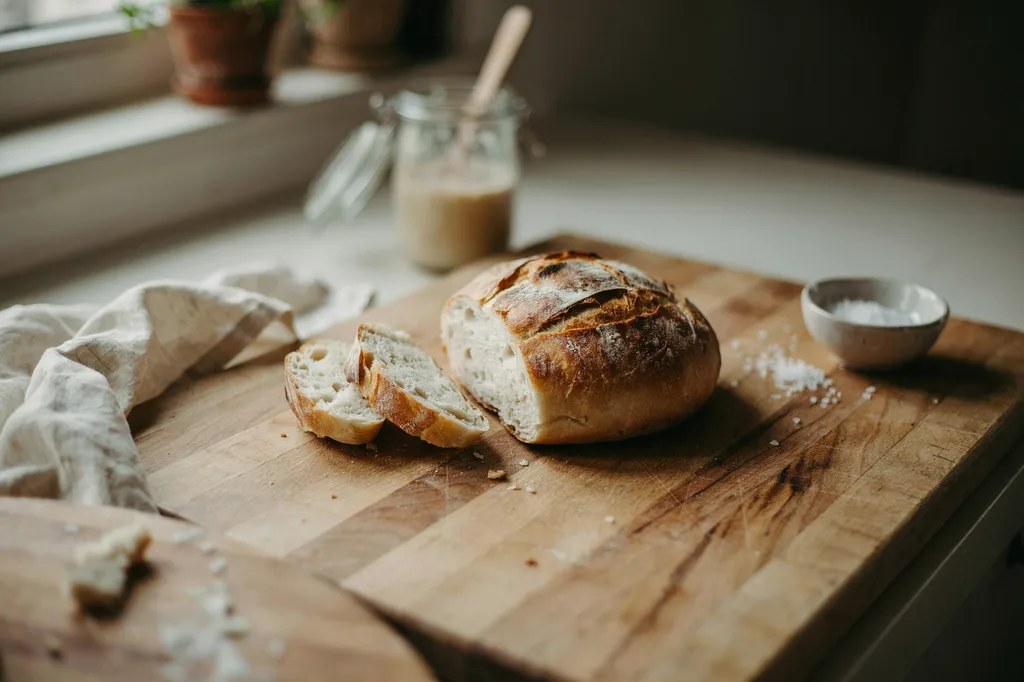
If you have ever felt that fresh milled sourdough was reserved for experienced bakers, this recipe is designed to prove otherwise. Fresh milled flour behaves differently from store-bought whole wheat: the bran is sharper, the germ is still alive, and the flour drinks water more slowly. Beginners often get pucks and gum-line crumb not because they did something wrong, but because the recipe was never written for fresh flour in the first place. This loaf is. It uses 100% freshly milled hard white wheat for a mild flavor that wheat-skeptics actually enjoy, an extra-long autolyse so the bran fully hydrates, and a generous 78% hydration that fresh flour can comfortably handle. A slow overnight cold retard does most of the work — you get the flavor of a 24-hour sourdough without standing over the dough. The single biggest tip for a beginner: trust the timeline, not the clock. Fresh milled doughs ferment faster than white-flour recipes you may have made before, so watch for a 50–75% rise in bulk rather than a fixed two-hour window. Use a clear straight-sided container and mark the start line. If it hits that line in 4 hours instead of 6, shape early. You will also want a young, active starter. Feed it 6–10 hours before mixing so it peaks while you are autolysing. The recipe assumes a 100% hydration starter; if yours is stiffer, just bump the water by 10 g. No Dutch oven? A heavy cast-iron pan with a stainless bowl inverted on top works perfectly for the first 20 minutes of steam, which is the only part of the bake that really matters for ear and oven spring.
Fresh Milled Flour Tortillas
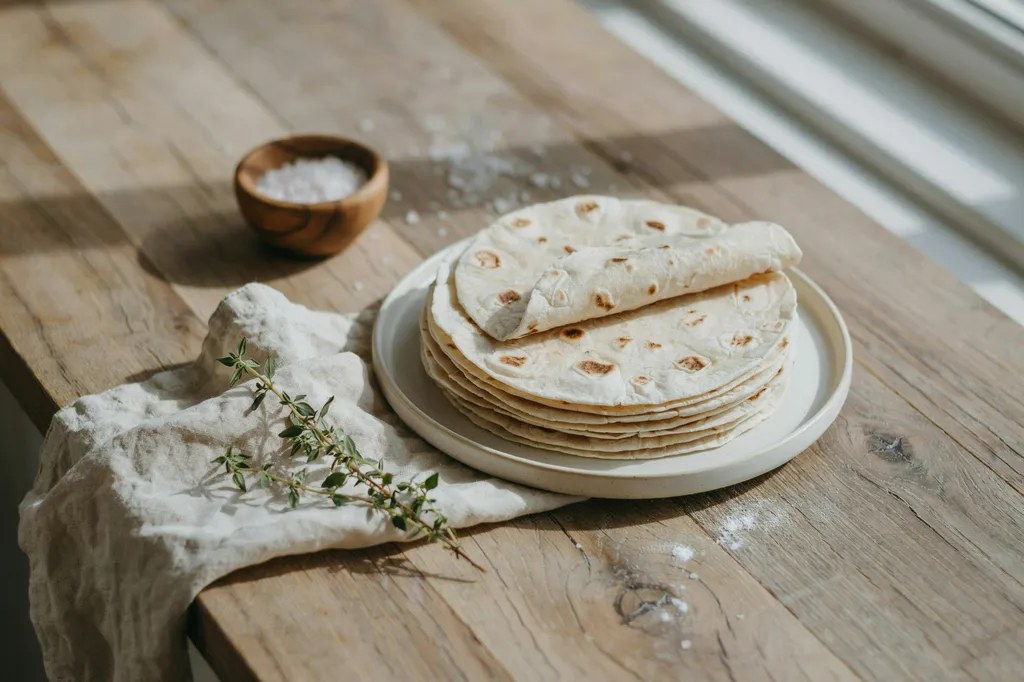
Fresh milled flour tortillas put store-bought to shame. The dough takes 10 minutes, no yeast, no proof — just mix, rest 30 minutes, roll, and griddle. The result is a soft, pliable tortilla with real wheat flavor that wraps without cracking. The key to soft tortillas is a small amount of fat and hot (not boiling) water. The fat coats the proteins and prevents toughness; hot water relaxes the dough so it rolls thin without springing back. Lard is traditional and best, but butter or neutral oil work well. Keep the heat moderate and don't overcook. Tortillas should puff slightly, develop a few brown spots, and remain flexible. Stack and wrap in a towel as you go so they steam soft. Makes 8 tortillas.
Related Content
Recommended Grains
Related Techniques
Cold Retard & Bulk for Fresh-Milled Sourdough
How to time and temperature-manage bulk fermentation and cold retard for fresh-milled sourdough to develop flavor without overproofing.
Build & Maintain a Fresh-Milled Sourdough Starter
A step-by-step guide to creating a robust whole-grain sourdough starter from scratch and maintaining it for weekly baking.