
How To Mill Flour At Home
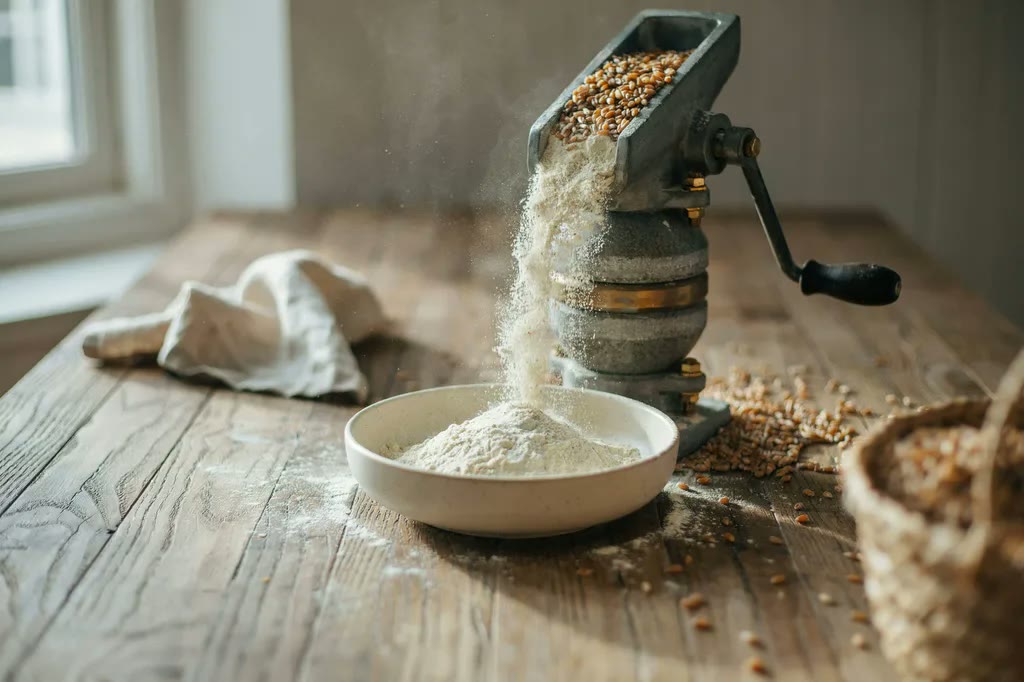
To mill flour at home, pour clean, dry wheat berries into an electric stone or impact mill set to your target texture, then catch the warm flour and use it within a few hours for the best flavor and rise.
Key Takeaways
- Soft white wheat, hard white wheat, hard red wheat, einkorn, spelt, and rye each behave differently — choose the berry to fit the recipe.
- Stone mills produce a cooler, more aromatic flour; impact mills are faster and finer.
- Mill on the finest setting for cakes and pastries, medium for everyday bread, coarse for porridge and rustic loaves.
- Use fresh-milled flour within 24–48 hours for peak aroma; freeze if you cannot bake right away.
- Always weigh, never scoop — fresh flour fluffs and a volume scoop can be off by 20%.
Summary
Milling your own flour is the single biggest upgrade most home bakers can make. A fresh-milled loaf carries the bran, germ, and endosperm together, so the bran and germ are still in the flour rather than removed at the mill — that is the nutritional difference. The aroma and natural sweetness are the time-sensitive part: those compounds fade within a day or two of milling. The mechanics are simple: a home mill cracks the berries between stones or impact heads, and you choose how coarse or fine the resulting flour is. The craft is matching the grain to the recipe and learning how the resulting flour behaves in a dough. This guide walks through choosing berries, the difference between stone and impact mills, fine versus coarse settings, the freshness window, and the handful of beginner mistakes that cost most new bakers their first loaf.
Steps
- 1
Choosing your grain berries. Start with the grain that fits what you bake most. Hard red wheat is the classic choice for sandwich bread and yeasted loaves because of its high protein and assertive, slightly tannic flavor. Hard white wheat is the gateway grain — same strong gluten, lighter flavor, lighter color, and far less family resistance. Soft white wheat is for muffins, cookies, biscuits, and pancakes because its lower protein keeps the crumb tender. Einkorn is the most ancient cultivated wheat and produces a buttery, gold-tinted flour that needs a gentler hand. Spelt sits between modern wheat and einkorn — strong enough for bread but forgiving. Rye is grassy, dense, and brings the most complex fermentation flavor to sourdough. Buy berries from a source that turns inventory quickly and stores them dry; older berries mill into duller flour.
- 2
Stone mills versus impact mills. Stone mills, like the Mockmill, Komo, or NutriMill Harvest, use two adjustable stones to grind the berries cooler and produce flour with a slightly variable particle size that ferments beautifully. Impact mills, like the NutriMill Classic, throw the berries against steel heads at high speed, producing a more uniform fine flour very quickly. For bread bakers, stone milling tends to give better fermentation tolerance and crust development. For everyday convenience and the finest possible flour for cakes, an impact mill wins on speed. Both produce excellent fresh flour — the choice is comfort, budget, and counter space.
- 3
Fine versus coarse settings. Every mill has a coarseness dial. The finest setting is for cakes, cookies, pastry, and white-style sandwich breads where you want the smoothest crumb. A medium-fine setting is the everyday default for yeasted bread and pizza dough — fine enough to develop strong gluten, with enough bran texture to hold steam and fermentation gases. A medium-coarse setting suits sourdough boules, pancakes, and crackers. A truly coarse setting produces cracked-grain flour for porridge or rustic multigrain loaves. When in doubt, mill a small test cup at one setting, rub it between your fingers, and re-mill finer if needed.
- 4
How much to mill at once. Mill what the recipe needs plus a small buffer, not a week's supply. Fresh flour begins oxidizing the moment the bran is cracked, and the natural oils in the germ start to turn slightly bitter within forty-eight hours at room temperature. A typical 1,000-gram loaf calls for about 700 grams of flour, and a home mill can produce that in three to five minutes. Mill, weigh, and use — that is the rhythm. If you do need a bigger batch (gift bread, holiday baking), bag and freeze the excess immediately in airtight containers; cold pauses the oxidation.
- 5
Freshness considerations and the peak window. The reason fresh-milled bread tastes different is that the germ oils and dozens of volatile aroma compounds are still intact. The flour is at its absolute peak for 24–72 hours after milling — sweetest, nuttiest, most fragrant. After that it stays perfectly usable for a week or two at room temperature; you will simply taste the difference as it flattens. Refrigeration in an airtight container holds peak for about a week and keeps the flour usable for a month; freezing airtight holds full quality for six months. Always let frozen flour warm to room temperature inside the bag before opening, so condensation does not form.
- 6
Common beginner mistakes to avoid. The four most common stumbles: scooping flour by volume (fresh flour is fluffy — always weigh in grams); using yesterday's hydration on today's flour (fresh-milled flour usually absorbs five to ten percent more water than store-bought, so add liquid in stages); skipping autolyse (a 30-minute rest after mixing flour and water transforms the dough); and treating fresh flour like white flour during fermentation (it ferments faster because the bran carries wild yeasts and enzymes — watch the dough, not the clock).
- 7
Sifting versus whole-flour baking. Sifting removes the largest bran flakes and gives you a lighter, taller loaf at the cost of some fiber and flavor. A 30 or 40-mesh sifter held over the bowl recovers about 70–80% as a finer flour and leaves coarse bran behind, which you can stir back into porridge or oatmeal. For sandwich bread and pizza, sifting helps beginners build confidence. For artisan loaves and pancakes, leave the flour whole.
- 8
Cleaning and maintaining your mill. A clean mill produces clean flour. Wipe stones and the hopper dry between sessions — never wash with water, since residual moisture causes berries to gum up the stones. For impact mills, run a quarter cup of rice through after milling oily grains like rye or spelt to absorb any film. Check the manufacturer's gap or coarseness reset procedure every few months, and store the mill away from steam and humidity.
- 9
Putting it into practice. For your first fresh-milled bake, mill 500 grams of hard white wheat on the finest setting, weigh exactly what your recipe calls for, and build in an extra 30-minute autolyse before kneading. The dough will feel slightly tackier than a white-flour dough — that is correct. Bake it the same day. The first time you slice into a fresh-milled loaf, the aroma alone will explain why this work is worth doing.
Related Content
Related Grains
Spelt
An ancient hexaploid wheat with mellow flavor and easy hydration.
Einkorn
The oldest cultivated wheat, prized for digestibility and rich flavor.
Hard White Wheat
A milder, lighter whole wheat that bakes up tender and golden.
Hard Red Wheat
A high-protein modern wheat ideal for hearty whole-grain breads.
Rye
Fresh-milled rye delivers deep, tangy flavor and chewy crumb — a low-gluten grain that powers sourdough, dense sandwich loaves, crackers, and the classic breads of Northern Europe.
Related Recipes
Fresh-Milled Artisan Hearth Bread
A rustic Dutch-oven loaf made with 100% freshly milled hard red and hard white wheat. Open crumb, crackly crust, leavened with commercial yeast.
100% Whole Wheat Sandwich Bread
A soft, everyday sandwich loaf made with 100% freshly milled hard white wheat. Beginner-friendly and built for sandwiches and toast.
Beginner Fresh Milled Sandwich Bread
A soft, tall, freezer-friendly sandwich loaf made with 100% fresh milled hard white wheat.
Honey Wheat Bread
Baking with freshly milled hard white wheat flour transforms an everyday recipe into something extraordinary. Within minutes of milling, whole-grain flour is bursting with natural oils and a sweet wheaty aroma — the part that fades first once flour sits — and it still carries the whole berry: bran, germ, and endosperm. Commercial white flour has the bran and germ removed and is stabilized for months of shelf life — fresh milling skips all of that, so you bake with the whole grain and with the aroma still in it. This honey wheat bread is the perfect entry point for new fresh-milled flour bakers. Hard white wheat is naturally mild, sweet, and lighter in color than hard red wheat, which makes it a forgiving choice for sandwich loaves. Honey adds tenderness, a touch of caramel sweetness, and helps the bread stay soft for days. Because fresh-milled flour absorbs water more slowly than store-bought flour, this recipe uses a generous autolyse rest so the bran can fully hydrate before kneading — the difference in crumb tenderness is dramatic. If this is your first whole-wheat loaf, plan to bake it on a quiet morning. Fresh-milled doughs feel a little tackier than white flour doughs at first; resist the urge to add more flour. After the autolyse you'll find it transforms into a smooth, supple dough that's easy to shape. Bake it once at the listed hydration before adjusting — the formula is dialed in for whole hard white wheat at room-temperature water.