
How To Store Wheat Berries for Long-Term Freshness
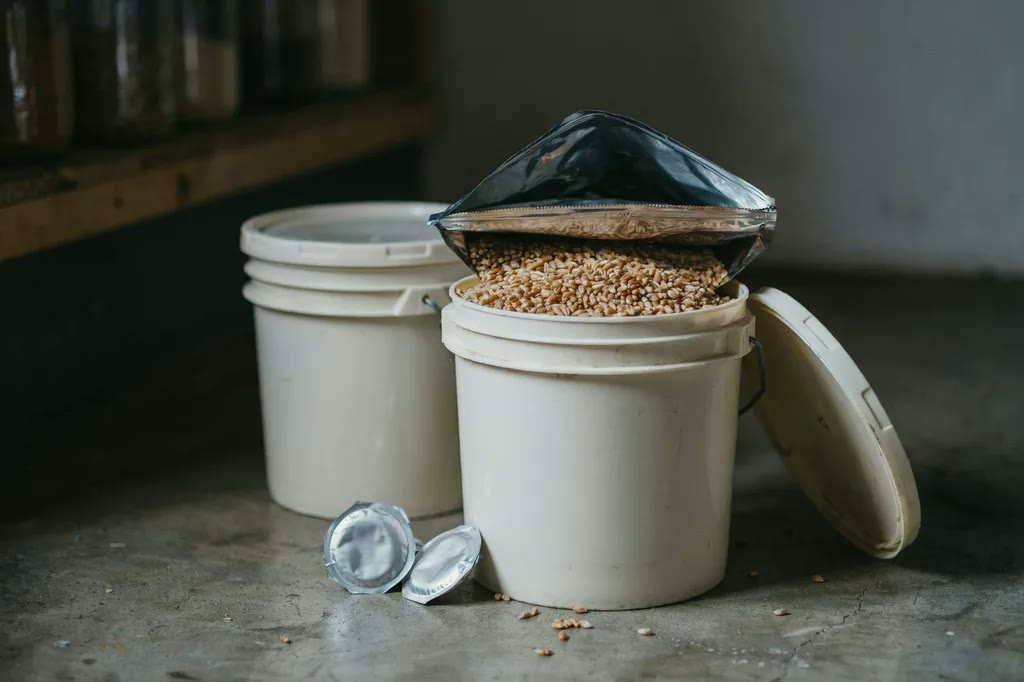
Store whole wheat berries in airtight, food-grade containers at cool, stable temperatures below 70°F with humidity under 60%. Expect 6–12 months in the bag they came in, 1–5 years in an airtight food-grade container, and 20–30 years sealed in Mylar with oxygen absorbers inside a bucket.
Key Takeaways
- Food-grade buckets with gamma-seal lids are the gold standard for 25-pound quantities.
- Keep moisture under 10% — berries that snap when bitten are dry; berries that dent are not.
- Cool and stable beats cold and variable; aim for 55–70°F year-round.
- Oxygen absorbers extend shelf life from the 1–5 years of a plain airtight container to 20–30 years.
- Pantries, basements, and interior closets work; garages, attics, and under-sink cabinets do not.
Summary
Whole wheat berries are nature's near-perfect storage food. As long as the bran is intact and the grain is dry, the germ stays dormant and the oils stay stable. Most home bakers do not need decades of shelf life, but the same techniques that let preppers store grain for thirty years let you keep a 25-pound bag fresh for two or three. This guide covers the four storage variables that actually matter — container, moisture, temperature, and oxygen — explains realistic shelf-life windows, and lists the locations in a typical home that work best (and worst). For sealed bag basics and quick-rotation tips, see also our shorter store wheat berries primer.
Steps
- 1
Why whole berries store so well. The bran coat is a natural barrier that keeps the germ and endosperm sealed from oxygen, light, and moisture. Once you mill the berry, that protection is gone and the clock starts. Buying and storing berries instead of bagged flour is the single biggest pantry-quality upgrade you can make.
- 2
Containers that work. Food-grade five-gallon buckets (HDPE plastic, marked with a 2 in the recycling triangle) are the standard for bulk storage and hold roughly 35 pounds of wheat. Pair the bucket with a gamma-seal lid so you can scoop berries weekly without breaking the seal. For smaller quantities, glass half-gallon Mason jars with new flat lids are excellent for one to three years. Mylar bags with heat-sealed seams and oxygen absorbers, placed inside buckets, push storage life to 20–30 years. Avoid thin plastic bags from the store, paper sacks long-term, and any container that previously held non-food contents.
- 3
Moisture control. Wheat needs to be below 10% moisture for long-term storage. Almost all wheat sold in the United States is harvested and stored at 12–14% moisture, then dries during distribution. A simple test: bite a berry; if it snaps cleanly between your molars, it is dry enough. If it dents or feels soft, spread it on a sheet pan in a 150°F oven for an hour, cool, and test again. Never store damp berries — mold and bacterial spoilage can begin within weeks.
- 4
Temperature and stability. Wheat keeps best between 55°F and 70°F with as little daily swing as possible. A pantry at a steady 68°F outperforms a garage that swings from 30°F to 90°F seasonally, even though the garage averages cooler. Each 10°F increase above 70°F roughly halves shelf life. Freezing is fine and pauses any potential insect activity, but constant freezer storage is overkill for most home setups.
- 5
Oxygen absorbers and shelf life. A single 300cc oxygen absorber in a five-gallon bucket of wheat, or 500–2000cc in a Mylar-lined bucket, brings residual oxygen below 0.5% and extends shelf life from the 1–5 years an airtight container gives you to 20–30 years. Drop the absorber in just before sealing, work quickly (absorbers activate in open air), and use a fresh absorber each time you reseal. Without absorbers, expect 1–5 years in any airtight food-grade container — bucket or jar — and 6–12 months in original bags.
- 6
Storage locations in a typical home. Best: a pantry on an interior wall, a basement that stays below 70°F year-round, an interior closet on the main floor, or under a bed in an air-conditioned room. Acceptable: a hall closet, a heated mudroom. Avoid: garages (temperature swings), attics (heat), unheated outbuildings (humidity), and the cabinet under any sink (humidity and the chance of a slow leak). Light is less critical than temperature because berries are opaque, but direct sunlight still warms the container.
- 7
Insect prevention. Even sealed, food-grade containers cannot fix what arrives infested. The most common pest is the Indian meal moth, whose eggs survive in flour and grain from the field. Two options: freeze fresh berries for 7 days at 0°F before transferring to storage containers, which kills eggs at every life stage; or include a single oxygen absorber, since adult insects cannot survive below 1% oxygen. Bay leaves and food-grade diatomaceous earth are folk solutions that help mildly but do not replace freezing or oxygen control.
- 8
Rotation and weekly use. Label every container with the date and the variety. Use the oldest first. A simple rule: a household that mills 2 pounds of flour a week (one loaf, one batch of pancakes) goes through a 25-pound bag in about three months, well inside the safe window of any storage method. If you stock multiple grains, store each variety separately so cross-contamination of bran particles does not muddy the flavor of your milled flour.
- 9
Signs berries have gone bad. Healthy wheat is firm, dry, and lightly nutty when chewed. Reject any berries that smell musty, sour, or like wet cardboard; any that feel sticky; any container with visible webbing (moth larvae) or live insects; and any that show black mold around the rim or lid. When in doubt, throw it out — the cost of a few pounds of wheat is far less than the cost of cleaning up a contaminated pantry.
- 10
Quick rotation containers for active baking. For the bag you use every week, a one-gallon glass jar with a hinged lid lives on the counter, holds about 6 pounds, and looks beautiful. Refill from your bulk bucket. This two-tier system — long-term sealed buckets plus a single working jar — gives you both convenience and shelf life without trade-offs.
Related Content
Related Grains
Spelt
An ancient hexaploid wheat with mellow flavor and easy hydration.
Einkorn
The oldest cultivated wheat, prized for digestibility and rich flavor.
Hard White Wheat
A milder, lighter whole wheat that bakes up tender and golden.
Hard Red Wheat
A high-protein modern wheat ideal for hearty whole-grain breads.
Rye
Fresh-milled rye delivers deep, tangy flavor and chewy crumb — a low-gluten grain that powers sourdough, dense sandwich loaves, crackers, and the classic breads of Northern Europe.
Related Recipes
100% Whole Wheat Sandwich Bread
A soft, everyday sandwich loaf made with 100% freshly milled hard white wheat. Beginner-friendly and built for sandwiches and toast.
Beginner Fresh Milled Sandwich Bread
A soft, tall, freezer-friendly sandwich loaf made with 100% fresh milled hard white wheat.
Honey Wheat Bread
Baking with freshly milled hard white wheat flour transforms an everyday recipe into something extraordinary. Within minutes of milling, whole-grain flour is bursting with natural oils and a sweet wheaty aroma — the part that fades first once flour sits — and it still carries the whole berry: bran, germ, and endosperm. Commercial white flour has the bran and germ removed and is stabilized for months of shelf life — fresh milling skips all of that, so you bake with the whole grain and with the aroma still in it. This honey wheat bread is the perfect entry point for new fresh-milled flour bakers. Hard white wheat is naturally mild, sweet, and lighter in color than hard red wheat, which makes it a forgiving choice for sandwich loaves. Honey adds tenderness, a touch of caramel sweetness, and helps the bread stay soft for days. Because fresh-milled flour absorbs water more slowly than store-bought flour, this recipe uses a generous autolyse rest so the bran can fully hydrate before kneading — the difference in crumb tenderness is dramatic. If this is your first whole-wheat loaf, plan to bake it on a quiet morning. Fresh-milled doughs feel a little tackier than white flour doughs at first; resist the urge to add more flour. After the autolyse you'll find it transforms into a smooth, supple dough that's easy to shape. Bake it once at the listed hydration before adjusting — the formula is dialed in for whole hard white wheat at room-temperature water.