
Technique
advanced
Stiff vs Liquid Levain for Fresh-Milled Sourdough
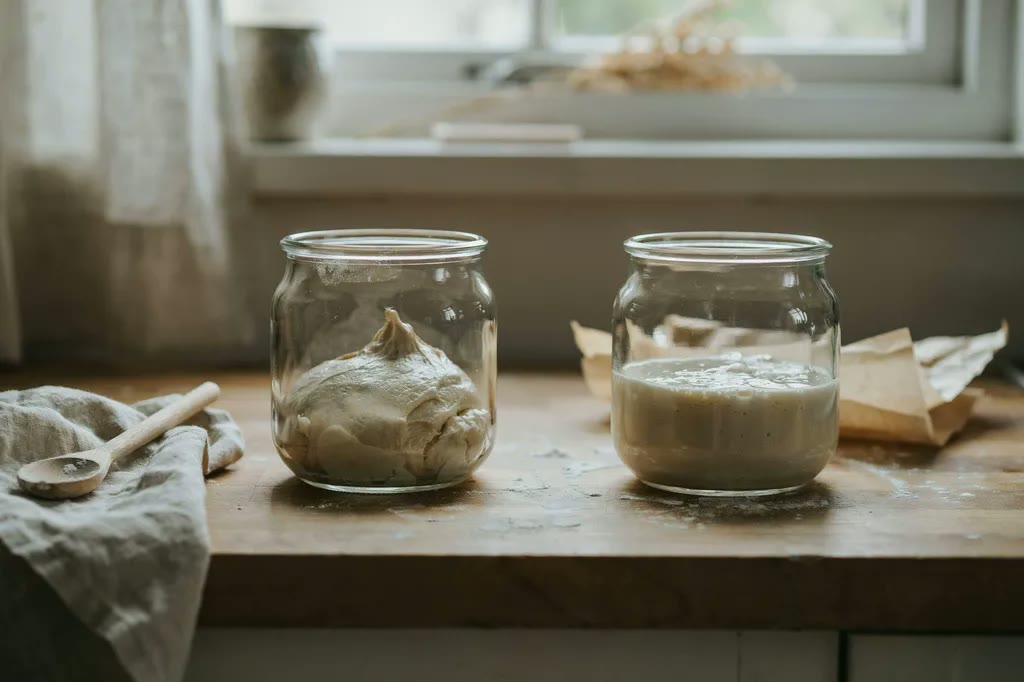
Use a stiff levain (50% hydration, 1:2:1) for sweet sandwich loaves and brioche; use a liquid levain (100% hydration, 1:5:5) for tangy artisan boules and open crumb.
Key Takeaways
- Stiff levain (1:2:1): yeast-forward, mild, tight crumb — best for enriched doughs
- Liquid levain (1:5:5): bacteria-forward, tangy, open crumb — best for hearth loaves
- Stiff levains peak slower (8-12 hours); liquid peaks in 4-6 hours
- Both use 20% of total flour as a starting baseline
- Fresh-milled flour amplifies the flavor difference between the two
Summary
When to choose a stiff (50% hydration) versus liquid (100% hydration) levain for fresh-milled breads, and how each affects flavor and crumb.
Steps
- 1
Stiff levain: 20 g starter + 40 g flour + 20 g water. Mix to a firm dough ball. Ferment 8-12 hours at 70°F.
- 2
Liquid levain: 20 g starter + 100 g flour + 100 g water. Whisk smooth. Ferment 4-6 hours at 75°F.
- 3
Ready signal: stiff levain rises to 2.5x and smells sweet-malty; liquid levain doubles with a foamy dome.
- 4
Use within a 2-hour window of peak for cleanest flavor.
- 5
Calculate: 20% of recipe flour goes into the levain build.
Frequently Asked Questions
Liquid levain. It is faster, easier to mix, and the peak window is more forgiving.
Yes, but adjust hydration in the final dough. A stiff levain adds less water; a liquid one adds more. Recalculate baker's percentages.
Whole rye and whole wheat work beautifully with liquid levains for traditional sour profiles. Stiff levains shine in fresh-milled brioche and panettone.
It rises 2-3x, the dome is rounded but not collapsed, and a poke springs back slowly.