
Cardamom Buns
Prep
75 min
Bake
14 min
Total time
1 hr 29 min
Hydration
60%
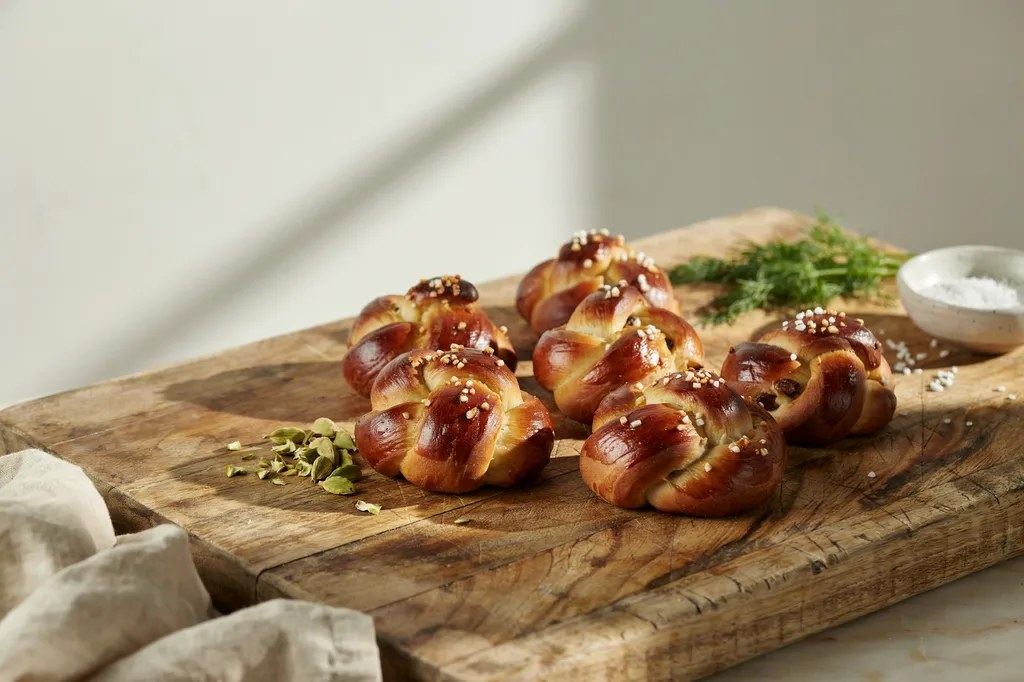
Swedish-style cardamom buns (kardemummabullar) made with freshly milled hard white wheat, rolled with butter and cardamom-sugar, knotted into stunning shapes, and topped with pearl sugar.
Key Takeaways
- Freshly toasted and ground cardamom is dramatically more aromatic than pre-ground.
- Letter-fold + slice + twist + knot is the shape — practice with one before the rest.
- Pearl sugar is traditional and stays crunchy after baking; coarse sugar is OK.
- Brush with egg wash for that bakery shine.
- Best eaten the day they're baked.
About this recipe
Scandinavian cardamom buns are a true baker's pastry: enriched yeasted dough rolled out, spread with butter and cardamom-sugar, folded in three, sliced into strips, and twisted into knots. The technique looks elaborate but is genuinely doable, and the resulting bun is one of the most aromatic things you can pull from your oven. Fresh milled hard white wheat gives the dough body and a slightly nutty character that pairs beautifully with cardamom. Toast and freshly grind your cardamom seeds if you can — pre-ground loses half its punch within weeks. Makes 12 generous buns.
Ingredients
- Dough: freshly milled hard white wheat flour500 g
- Dough: whole milk (warm)200 g
- Dough: sugar60 g
- Dough: instant yeast7 g
- Dough: egg1 large
- Dough: ground cardamom10 g (1.5 tbsp)
- Dough: softened butter90 g
- Dough: fine sea salt8 g
- Filling: softened butter120 g
- Filling: brown sugar120 g
- Filling: ground cardamom8 g (1 tbsp)
- For finishing: 1 egg beaten with 1 tbsp water; pearl sugar
Instructions
- 1
Whisk milk, sugar, yeast, egg, and cardamom in a stand mixer bowl.
- 2
Add flour and salt. Mix until shaggy, then knead on medium 5 minutes.
- 3
Add softened butter a tablespoon at a time, kneading until each is absorbed. Knead 6 more minutes.
- 4
Bulk ferment 90 minutes until doubled.
- 5
Make filling: cream butter, brown sugar, and cardamom together.
- 6
Roll dough on a lightly floured counter to a 16x20 inch rectangle.
- 7
Spread filling evenly across the surface.
- 8
Fold the bottom third up over the middle, then the top third down (like a letter). You now have a long narrow rectangle.
- 9
Cut into 12 vertical strips.
- 10
Take one strip, hold one end down, and twist the other end. Wrap the twisted strip around two fingers, tucking the end through the loop — forms a knot.
- 11
Place knots on parchment-lined sheet pans with 2 inches of space.
- 12
Proof 60 minutes covered until puffed.
- 13
Preheat oven to 425°F (220°C).
- 14
Brush buns with egg wash and sprinkle with pearl sugar.
- 15
Bake 12–15 minutes until deeply golden.
- 16
Cool 10 minutes before serving.
home grain milling tutorial — hydration, gluten development, and grain choice tips that make this recipe work.
Learn about this grain: Hard White Wheat guide — flavor, milling notes, baking tips, and four in-depth guides on hydration, storage, and common mistakes. Or browse more Hard White Wheat recipes.
Learn a technique
All guides →- Bulk Fermentation with Fresh-Milled FlourFresh-milled flour ferments faster than commercial flour. Watch the dough, not the clock, and end bulk fermentation when volume has grown 50–75%.
- How To Build Gluten With Fresh Milled FlourGluten development in fresh-milled flour is a different craft than in commercial white flour. White-flour doughs love aggressive kneading, slap-and-folds, and stand mixers on high — the smooth endosperm forms long uninterrupted gluten strands quickly. Fresh-milled flour cannot work that way because the bran physically interrupts every gluten strand it touches. The bakers who get gorgeous open crumb out of fresh flour all do the same thing: hydrate fully, rest patiently, fold gently, and choose the right grain. This guide walks through the science and the technique.
Related recipes
Browse all recipes →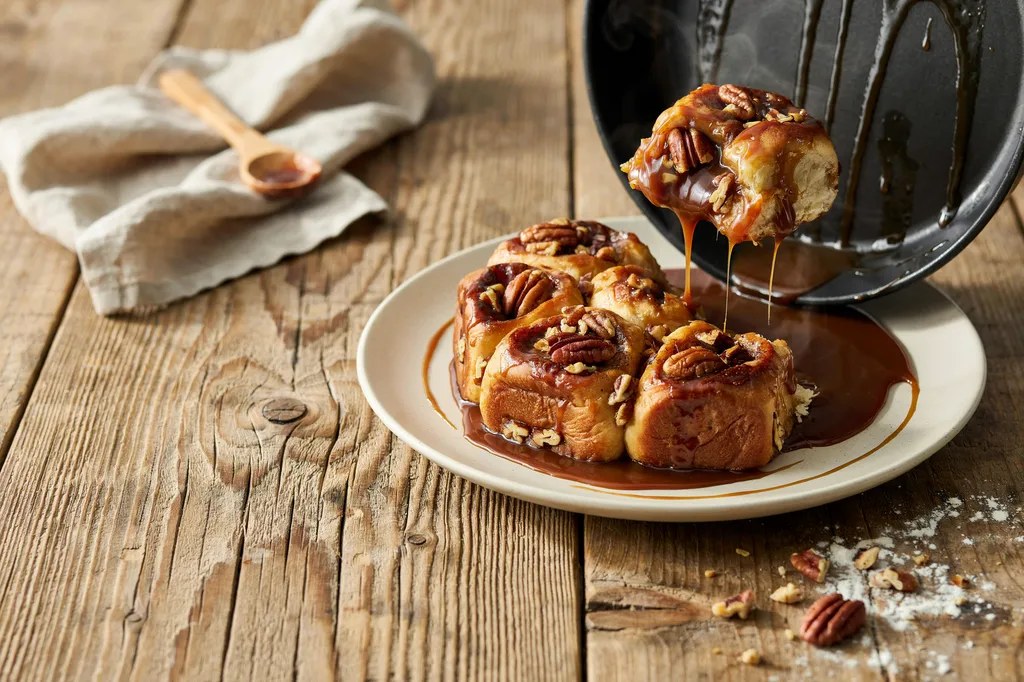
Sticky Buns
Sticky buns are cinnamon rolls' richer, more dramatic sibling. The buns bake on top of a brown sugar caramel studded with pecans; once baked and flipped, the caramel becomes the topping. The fresh milled flour adds depth that supports the heavy sweetness — bakery sticky buns can taste cloying, but the whole-grain version remains balanced. Make the dough the night before, retard cold, assemble in the morning, and bake straight from the fridge for a relaxed holiday breakfast. The buns must be flipped within 2 minutes of leaving the oven or the caramel sets and rips the buns apart.
Hot Cross Buns
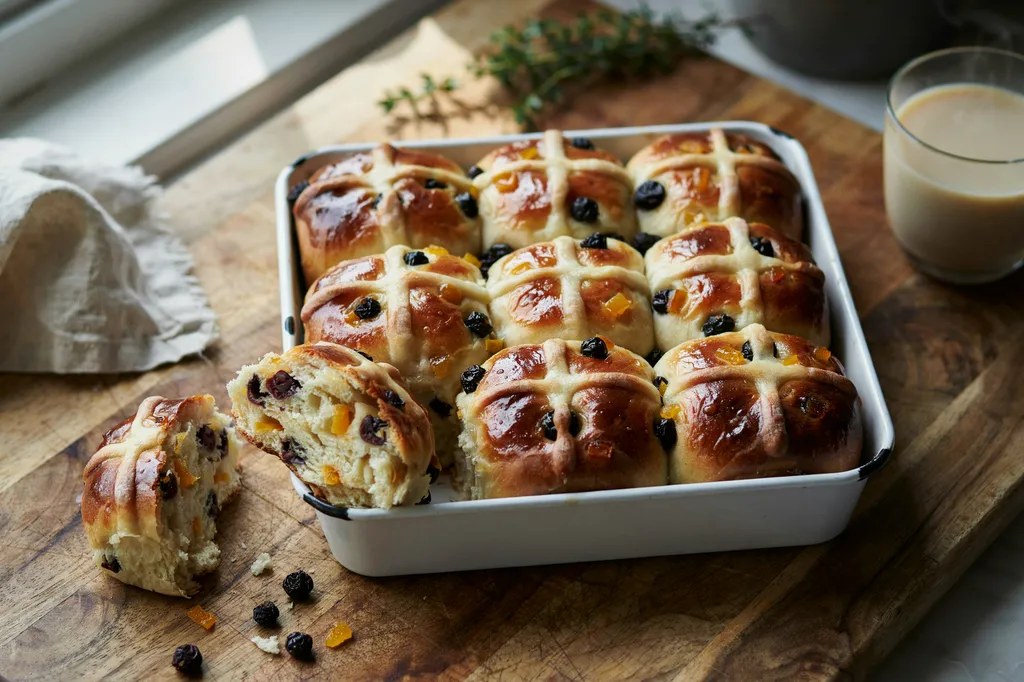
Hot cross buns are an Easter tradition with centuries of history — soft enriched dough, warming spices, dried fruit, and the iconic cross piped across the top. Fresh milled hard white wheat brings nuttiness and depth that store-bought versions cannot match. The spices (cinnamon, allspice, nutmeg, clove) and citrus peel (or zest) define the flavor; currants and raisins provide pops of sweetness. The cross is made from a simple flour-water paste piped just before baking — it stays white against the golden-brown crust. A warm apricot jam glaze at the end gives the signature shine.
Fresh-Milled Hamburger Buns
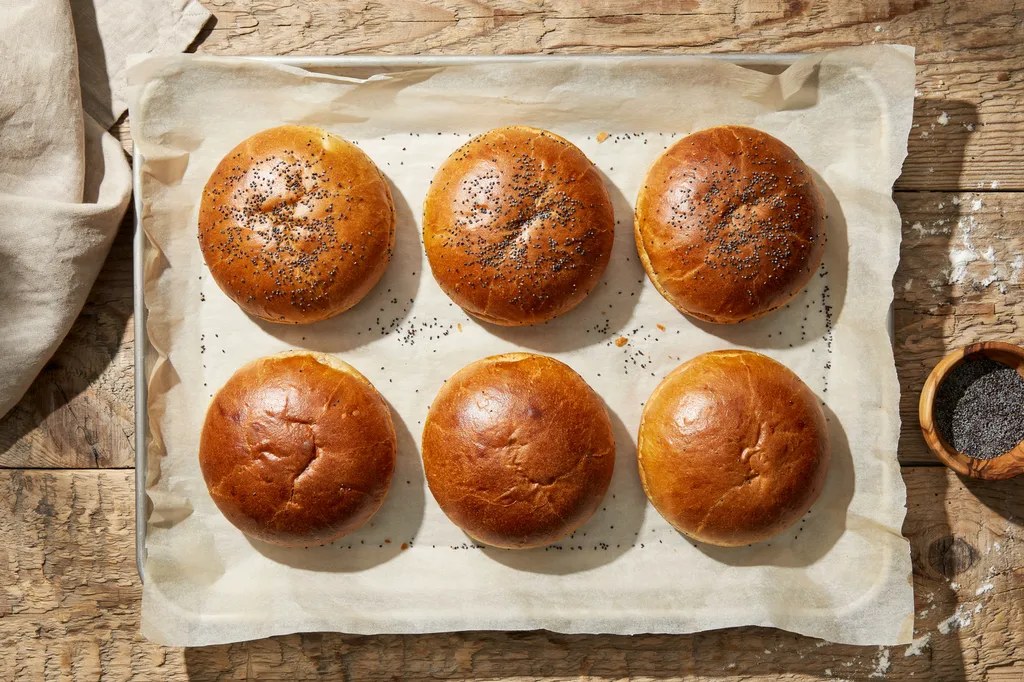
Baking with freshly milled hard white wheat flour transforms an everyday recipe into something extraordinary. Within minutes of milling, whole-grain flour is bursting with natural oils and a sweet wheaty aroma — the part that fades first once flour sits — and it still carries the whole berry: bran, germ, and endosperm. Commercial white flour has the bran and germ removed and is stabilized for months of shelf life — fresh milling skips all of that, so you bake with the whole grain and with the aroma still in it. Once you bake your own hamburger buns with fresh-milled flour, the store-bought version becomes hard to go back to. These buns are soft, slightly sweet, and sturdy enough to hold a juicy burger without falling apart. A milk-and-butter enriched dough plus an egg wash gives them a glossy, golden top — sprinkle with sesame seeds for the classic look. Hard white wheat keeps the buns light in color and mild in flavor so they don't overpower the burger. The recipe makes 8 standard buns, but you can divide the dough into 6 larger pieces for a brioche-bun style. Plan ahead: the dough takes about 3 hours from mix to oven.
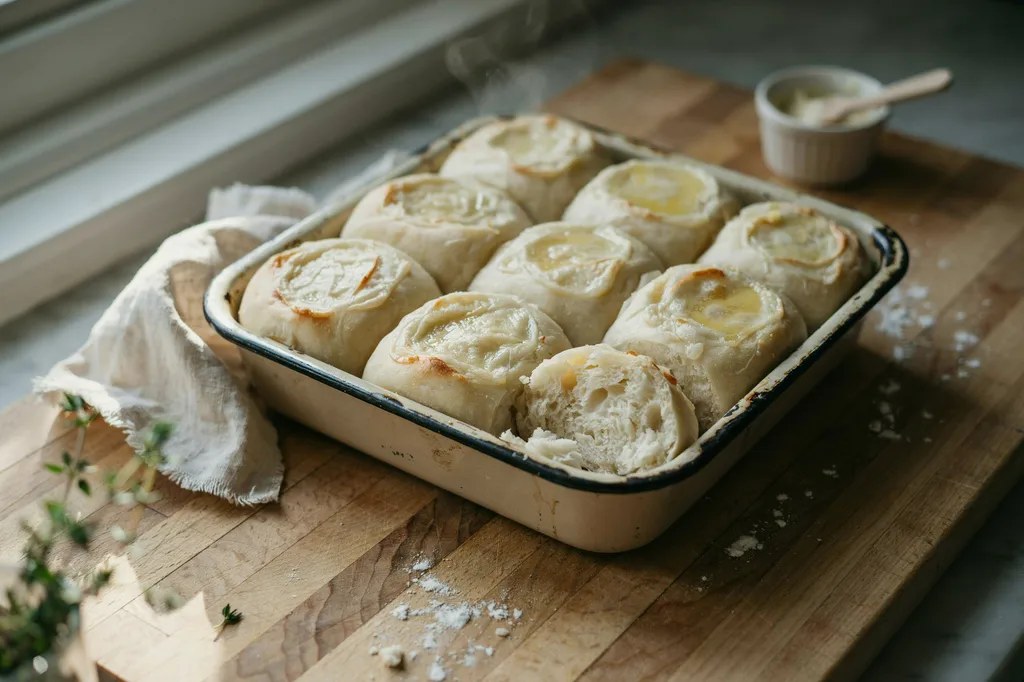
Soft Potato Rolls
Baking with freshly milled hard white wheat flour transforms an everyday recipe into something extraordinary. Within minutes of milling, whole-grain flour is bursting with natural oils and a sweet wheaty aroma — the part that fades first once flour sits — and it still carries the whole berry: bran, germ, and endosperm. Commercial white flour has the bran and germ removed and is stabilized for months of shelf life — fresh milling skips all of that, so you bake with the whole grain and with the aroma still in it. Mashed potato is the secret ingredient behind the softest dinner rolls you'll ever bake. Starch from the potato traps moisture, slows down staling, and produces a melt-in-your-mouth texture that fresh-milled hard white wheat alone can't quite match. These pull-apart rolls have a tender, almost cottony crumb and a glossy golden top that's perfect for sliders, sandwiches, or simply slathering with butter. Use leftover mashed potato or boil a small russet specifically for this recipe — either works. Plain mashed potato is best (no garlic or cream), and it should be at room temperature when you mix the dough. Because of the potato starch, the dough rises a little more slowly than a standard enriched dough; give it the time it needs.
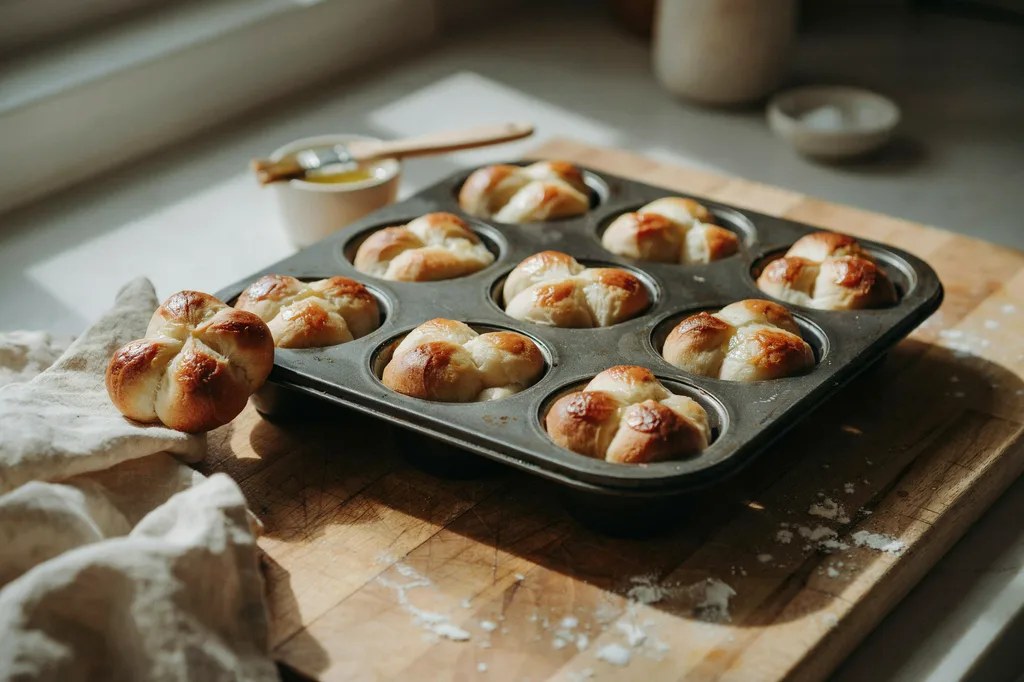
Cloverleaf Dinner Rolls
Baking with freshly milled hard white wheat flour transforms an everyday recipe into something extraordinary. Within minutes of milling, whole-grain flour is bursting with natural oils and a sweet wheaty aroma — the part that fades first once flour sits — and it still carries the whole berry: bran, germ, and endosperm. Commercial white flour has the bran and germ removed and is stabilized for months of shelf life — fresh milling skips all of that, so you bake with the whole grain and with the aroma still in it. Cloverleaf dinner rolls are the showstopper at holiday tables — three buttery dough balls baked in a muffin tin so they fuse into a perfect three-petal shape. Fresh-milled hard white wheat gives them a sweet, mellow flavor that holds up to gravy or butter without overpowering the rest of the meal. The dough is enriched with butter, egg, and a touch of sugar, which keeps the crumb pillowy and helps the rolls reheat beautifully the next day. Don't be intimidated by the shaping — it's repetitive but quick, and even uneven rolls bake into picture-perfect cloverleafs as the dough balls expand and meet in the oven. This recipe makes 12 rolls and uses a standard muffin tin.
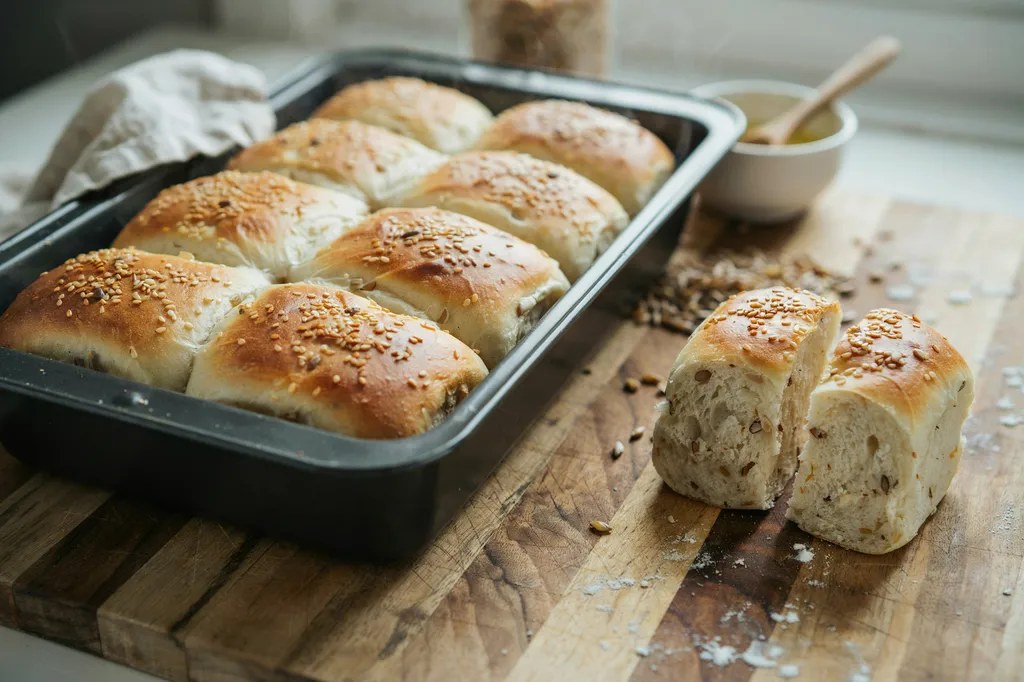
Fresh Milled Hot Dog Buns
Soft, pillowy hot dog buns made with 100% fresh milled flour. Yield 8 buns. Prep 25 min, proof 90 min, bake 18 min.
Related Content
Recommended Grains
Related Techniques
Bulk Fermentation with Fresh-Milled Flour
Fresh-milled flour ferments faster than commercial flour. Watch the dough, not the clock, and end bulk fermentation when volume has grown 50–75%.
How To Build Gluten With Fresh Milled Flour
Gluten development in fresh-milled flour is a different craft than in commercial white flour. White-flour doughs love aggressive kneading, slap-and-folds, and stand mixers on high — the smooth endosperm forms long uninterrupted gluten strands quickly. Fresh-milled flour cannot work that way because the bran physically interrupts every gluten strand it touches. The bakers who get gorgeous open crumb out of fresh flour all do the same thing: hydrate fully, rest patiently, fold gently, and choose the right grain. This guide walks through the science and the technique.