
How To Build Gluten With Fresh Milled Flour
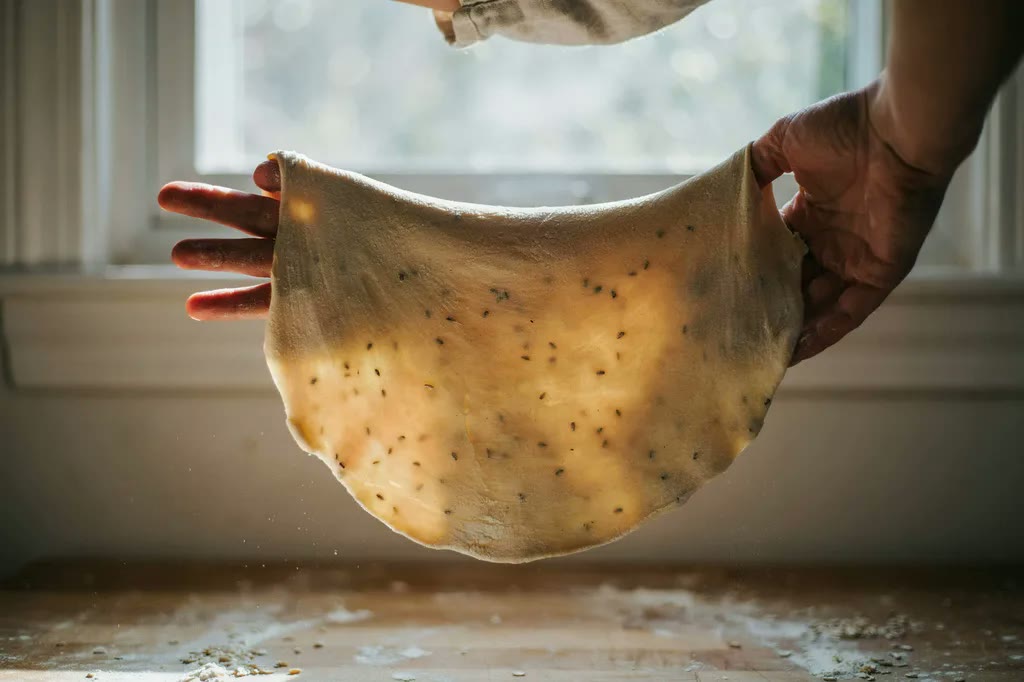
Build strong gluten in fresh-milled dough by hydrating fully with a 30–60 minute autolyse, then using gentle stretch-and-folds every 30 minutes during the first 90 minutes of bulk fermentation rather than aggressive kneading — the bran cuts the gluten network, so patience and water do more than muscle.
Key Takeaways
- Bran limits gluten network length — patience and water build more strength than kneading.
- Autolyse for 30–60 minutes; gluten begins forming without any work.
- Stretch-and-folds every 30 minutes during early bulk are more effective than upfront kneading.
- Hard red and hard white wheat have enough protein for great gluten; spelt and einkorn need gentler handling.
- Over-kneaded fresh-milled dough tears and weakens — back off when it feels rough.
Summary
Gluten development in fresh-milled flour is a different craft than in commercial white flour. White-flour doughs love aggressive kneading, slap-and-folds, and stand mixers on high — the smooth endosperm forms long uninterrupted gluten strands quickly. Fresh-milled flour cannot work that way because the bran physically interrupts every gluten strand it touches. The bakers who get gorgeous open crumb out of fresh flour all do the same thing: hydrate fully, rest patiently, fold gently, and choose the right grain. This guide walks through the science and the technique.
Steps
- 1
How gluten forms. Gluten is a protein network formed when two proteins in wheat — glutenin and gliadin — meet water and align into elastic sheets. Glutenin provides strength and elasticity; gliadin provides extensibility. The network builds through hydration and mechanical work, but the network is fragile early and strong once mature. Heat sets the network permanently in the oven.
- 2
Why fresh-milled gluten works differently. Fresh-milled flour contains the bran, which under a microscope is jagged-edged flakes. When you knead the dough, the bran physically nicks the gluten strands as they form. The result is a network with many small interruptions rather than one continuous web. This is why fresh-milled bread rarely produces the perfect classical windowpane — the network is intentionally discontinuous. The fix is not more kneading, which only makes more cuts, but slow gentle stretching that lets the network reform around the bran.
- 3
Step 1 — choose a high-protein grain. Hard red wheat (typically 13–15% protein) is the strongest gluten-former in mainstream fresh-milled baking. Hard white wheat (12–14%) is nearly as strong and milder in flavor. Spelt (10–13%) is moderate and slightly weaker. Einkorn (10–14%) has a different gluten structure entirely — its glutenin proteins do not form the same long strands and cannot produce a strong elastic network no matter the technique. Rye (8–12%) has minimal gluten and relies on pentosans instead of gluten for structure. Choose the grain before worrying about technique.
- 4
Step 2 — hydrate fully and autolyse. Mix the flour and water (and pre-ferment, if using) and rest for 30–60 minutes before adding salt. During this rest, water penetrates the bran and the endosperm equally, gluten begins forming on its own through molecular alignment, and the dough transforms from rough and gritty to smooth and extensible. Autolyse does roughly 50% of the gluten development for you with zero effort. Longer is generally better for fresh-milled flour — even up to 2 hours.
- 5
Step 3 — incorporate salt gently. After autolyse, add the salt with a small splash of additional water and pinch it into the dough until evenly distributed. Salt tightens the gluten network and slightly inhibits enzyme activity, so adding it after autolyse rather than during gives the autolyse maximum effect. Do not knead aggressively at this stage — just mix until the salt is gone and the dough comes together.
- 6
Step 4 — stretch-and-fold during bulk. Every 30 minutes for the first 90 minutes of bulk fermentation, wet one hand and perform a set of folds: lift the dough from one side, stretch it up and fold it over the top; rotate the bowl 90 degrees and repeat three more times. Each set takes 30 seconds, builds significant strength without tearing, and produces no more bran damage than the bowl itself. You will feel the dough grow noticeably stronger between sets 1 and 4.
- 7
Step 5 — coil folds in late bulk. After the first 90 minutes, switch to coil folds — wet your hands, lift the dough from the center with both hands, let the ends drop back under, and place the dough back down so the new bottom is what was just lifted from the middle. Coil folds preserve the air the dough has built without flattening it. Two coil folds 30 minutes apart in late bulk are usually enough.
- 8
When kneading is still appropriate. For enriched sandwich bread with milk, butter, and sugar, a short knead (5–8 minutes by hand or 5 minutes on low in a stand mixer) at the start replaces some of the stretch-and-fold work because the fats and sugars slow gluten development. For lean artisan bread, kneading rarely helps fresh-milled flour and often hurts. When in doubt, skip the knead and add an extra set of folds.
- 9
Signs your gluten is strong enough. The dough holds a shape when scooped out of the bowl rather than puddling. It passes a gentle stretch test — a small piece pulled from the surface stretches into a translucent membrane with a few small tears (perfect transparency is not required for fresh-milled). The surface looks domed and smooth rather than slack and flat. The dough has visibly grown 60–80% in volume.
- 10
Signs of over-worked gluten. The dough surface looks rough or pebbly and feels rubbery rather than supple. Stretch tests show the dough tearing in long strips rather than holding together. The dough has lost its ability to grow during bulk because the network has been damaged beyond reformation. Recovery: skip further folds, let the dough rest 30 minutes, and continue to the shape and proof stages with reduced expectations. Prevention: stop folding once the dough feels strong; do not chase one more fold for insurance.
- 11
Shaping to preserve gluten. After bulk, shape with a light hand. Pre-shape the dough into a loose round, rest 15–20 minutes uncovered on the bench, then do the final shape with confident single passes. Tightening too aggressively tears the network and leaks gas; gentle tightening preserves both. The final shape should feel snug like a fresh peach, not tight like a baseball.
Related Content
Related Grains
Spelt
An ancient hexaploid wheat with mellow flavor and easy hydration.
Einkorn
The oldest cultivated wheat, prized for digestibility and rich flavor.
Hard White Wheat
A milder, lighter whole wheat that bakes up tender and golden.
Hard Red Wheat
A high-protein modern wheat ideal for hearty whole-grain breads.
Related Recipes
Fresh-Milled Pizza Dough
A 24-hour cold-fermented 100% fresh-milled pizza dough with crisp edges, a tender chew, and a deep wheaty flavor.
Fresh-Milled Artisan Hearth Bread
A rustic Dutch-oven loaf made with 100% freshly milled hard red and hard white wheat. Open crumb, crackly crust, leavened with commercial yeast.
Beginner Fresh Milled Sandwich Bread
A soft, tall, freezer-friendly sandwich loaf made with 100% fresh milled hard white wheat.
Honey Wheat Bread
Baking with freshly milled hard white wheat flour transforms an everyday recipe into something extraordinary. Within minutes of milling, whole-grain flour is bursting with natural oils and a sweet wheaty aroma — the part that fades first once flour sits — and it still carries the whole berry: bran, germ, and endosperm. Commercial white flour has the bran and germ removed and is stabilized for months of shelf life — fresh milling skips all of that, so you bake with the whole grain and with the aroma still in it. This honey wheat bread is the perfect entry point for new fresh-milled flour bakers. Hard white wheat is naturally mild, sweet, and lighter in color than hard red wheat, which makes it a forgiving choice for sandwich loaves. Honey adds tenderness, a touch of caramel sweetness, and helps the bread stay soft for days. Because fresh-milled flour absorbs water more slowly than store-bought flour, this recipe uses a generous autolyse rest so the bran can fully hydrate before kneading — the difference in crumb tenderness is dramatic. If this is your first whole-wheat loaf, plan to bake it on a quiet morning. Fresh-milled doughs feel a little tackier than white flour doughs at first; resist the urge to add more flour. After the autolyse you'll find it transforms into a smooth, supple dough that's easy to shape. Bake it once at the listed hydration before adjusting — the formula is dialed in for whole hard white wheat at room-temperature water.
100% Whole Wheat Sourdough
A deeply flavored sourdough loaf made entirely from fresh milled hard red wheat.