
Fresh Milled Hoagie Rolls
Prep
30 min
Bake
22 min
Total time
52 min
Hydration
72%
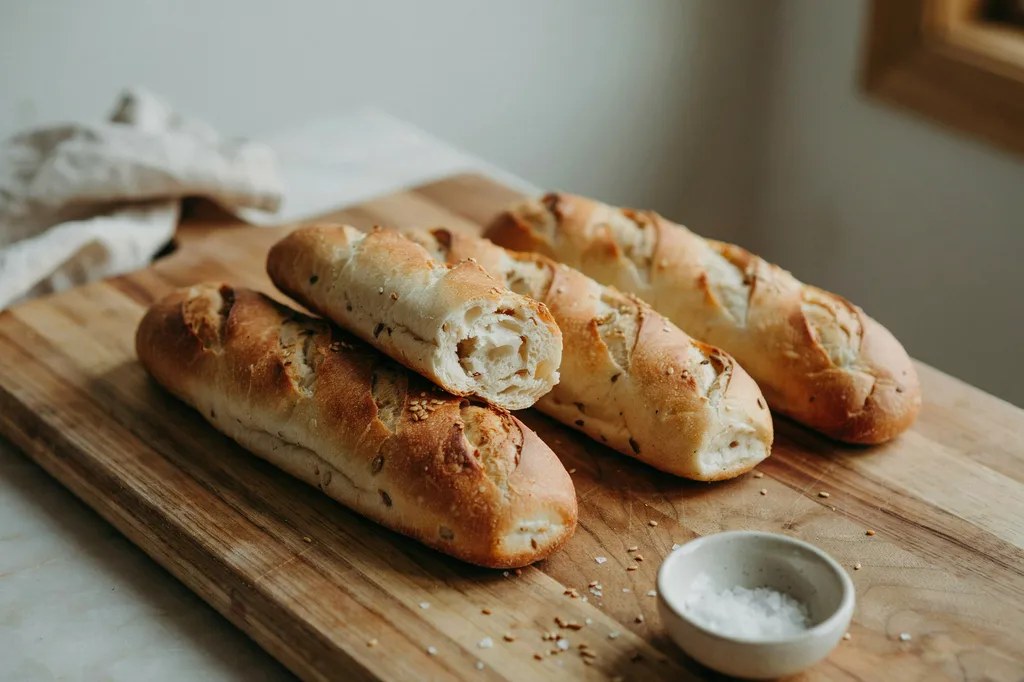
Fresh milled hoagie rolls are oblong sandwich rolls with a soft interior and a thin crackly crust, sized to hold generous fillings without falling apart.
Key Takeaways
- Higher hydration (72%) and longer bulk ferment build a sturdy yet tender crumb.
- Hard red wheat adds wheat flavor; hard white softens the bite.
- Steam in the first 10 minutes of baking for the right crust.
- Score one long slash down the top before baking.
About this recipe
Soft but sturdy 8-inch sub rolls made with 100% fresh milled flour — sized for hoagies, cheesesteaks, and sub sandwiches. Yield 6 rolls. Prep 30 min, proof 90 min, bake 22 min.
Ingredients
- Fresh milled hard white wheat flour350 g (about 3 cups, sifted)
- Fresh milled hard red wheat flour150 g (about 1¼ cups, sifted)
- Warm water (100°F)360 g (1½ cups)
- Honey15 g (1 Tbsp)
- Instant yeast6 g (2 tsp)
- Olive oil20 g (1½ Tbsp)
- Fine sea salt10 g (1¾ tsp)
- Cornmeal for the pan1 Tbsp
Instructions
- 1
Whisk water, honey, and yeast; rest 5 minutes.
- 2
Add flours, oil, and salt. Mix shaggy. Autolyse 30 minutes.
- 3
Knead 8 minutes; perform 3 stretch-and-folds 20 minutes apart during bulk.
- 4
Bulk ferment 60–75 minutes until risen by half and pillowy.
- 5
Divide into 6 pieces (about 150 g each). Pre-shape into rounds; rest 15 minutes.
- 6
Shape each into an 8-inch log: flatten, fold, roll tight, seal the seam.
- 7
Place seam-down on parchment dusted with cornmeal. Proof 30–40 minutes until puffy.
- 8
Slash one shallow line down the top. Bake at 425°F (220°C) with steam for the first 10 minutes.
- 9
Bake another 10–12 minutes until deeply golden (internal 200°F).
- 10
Cool fully on a rack before slicing — at least 30 minutes.
home grain milling tutorial — hydration, gluten development, and grain choice tips that make this recipe work.
Learn about this grain: Spelt guide — flavor, milling notes, baking tips, and four in-depth guides on hydration, storage, and common mistakes. Or browse more Spelt recipes.
Learn a technique
All guides →- How to Autolyse Fresh Milled FlourCombine flour and water and let it rest before adding yeast and salt. Bran softens, gluten develops passively, and the final dough is dramatically easier to handle.
- How to Increase Hydration SuccessfullyRaise water in 5% increments, autolyse longer, and lean on stretch and folds instead of kneading.
- How to Stretch and Fold DoughEvery 30 minutes during bulk ferment, lift one side of the dough, stretch up, and fold over the top. Rotate 90° and repeat.
Related recipes
Browse all recipes →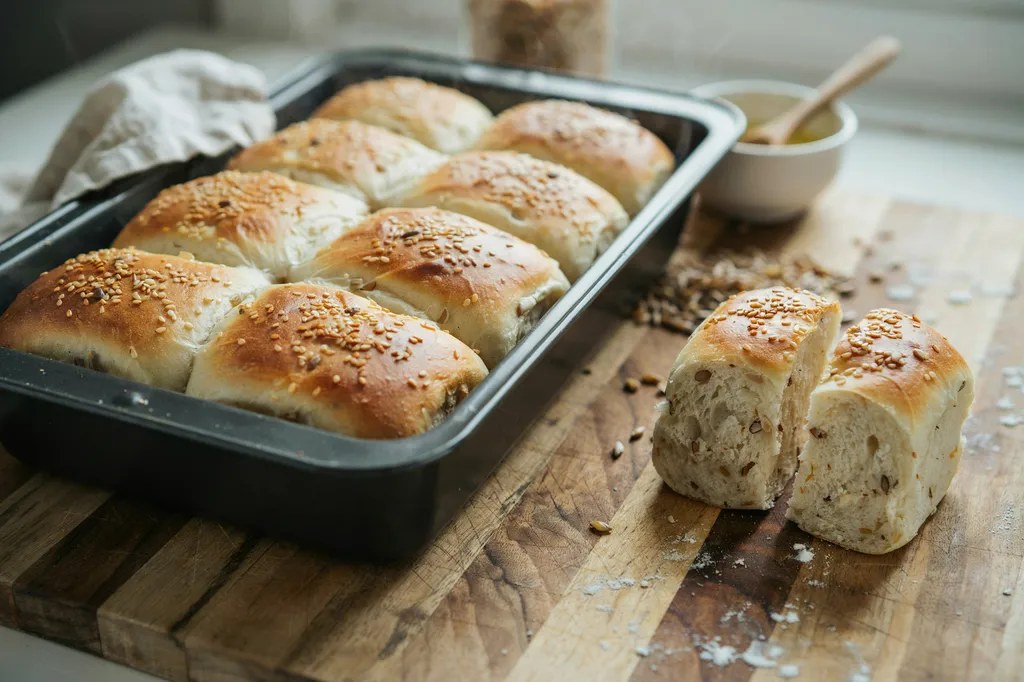
Fresh Milled Hot Dog Buns
Soft, pillowy hot dog buns made with 100% fresh milled flour. Yield 8 buns. Prep 25 min, proof 90 min, bake 18 min.

Fresh Milled Garlic Knots
Pizza-shop style garlic knots made with 100% fresh milled flour. Yield 12 knots. Prep 25 min, proof 75 min, bake 14 min.
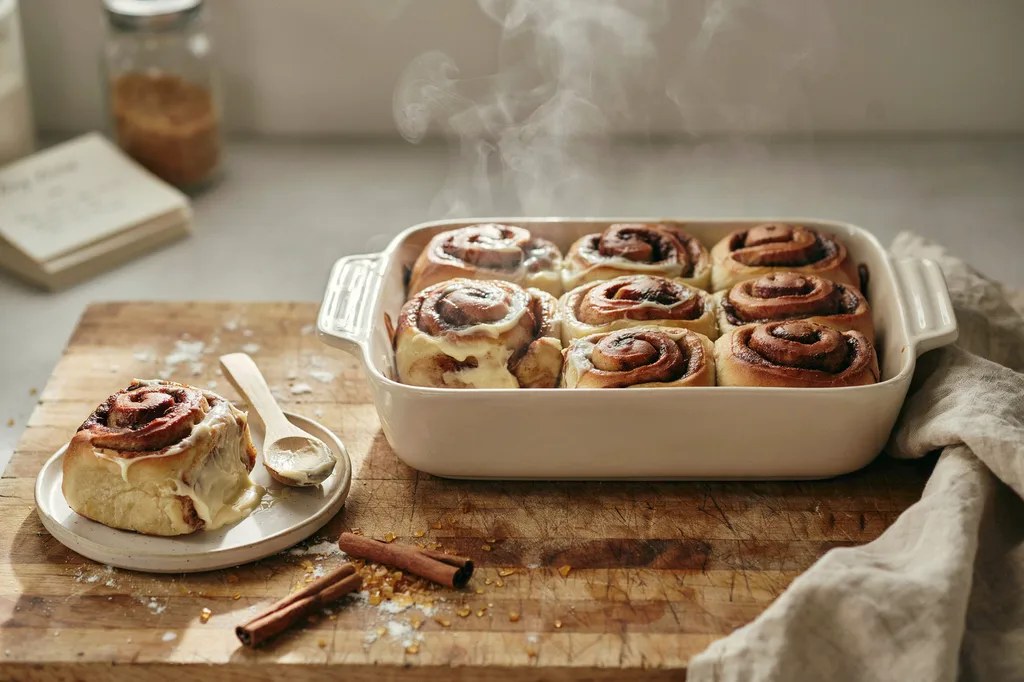
Fresh Milled Cinnamon Rolls
Soft, enriched cinnamon rolls made with freshly milled flour. Yields 12 rolls. Prep 30 min, first rise 60–90 min, shape 15 min, second rise 45 min, bake 25 min.
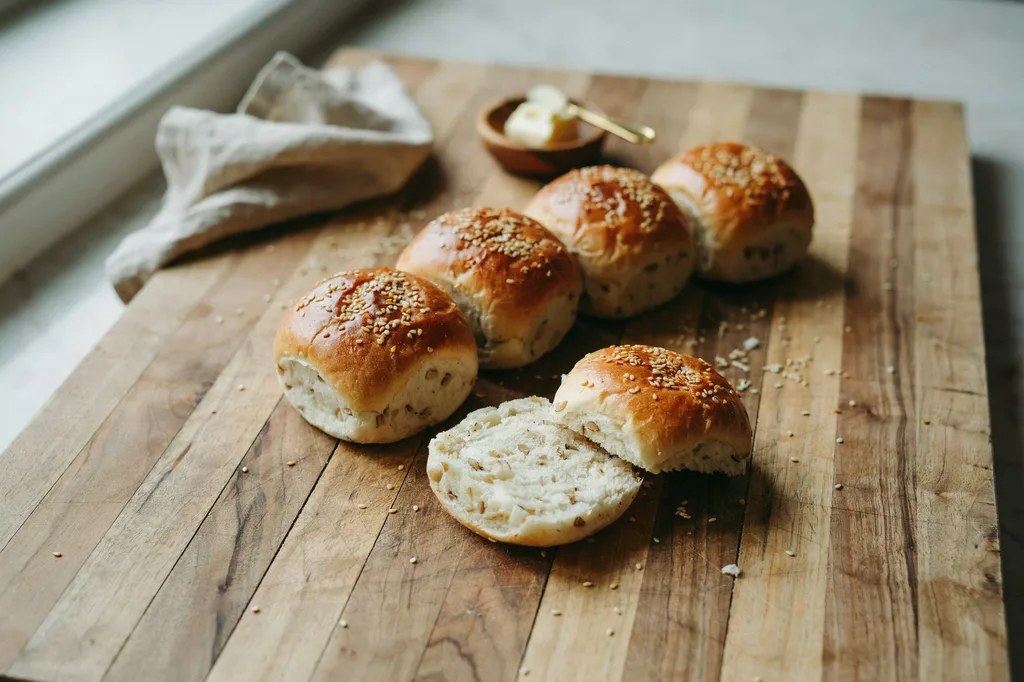
Fresh-Milled Hamburger Buns
Soft but sturdy 100% fresh-milled hamburger buns built for backyard grilling. Holds up to juicy burgers without falling apart.
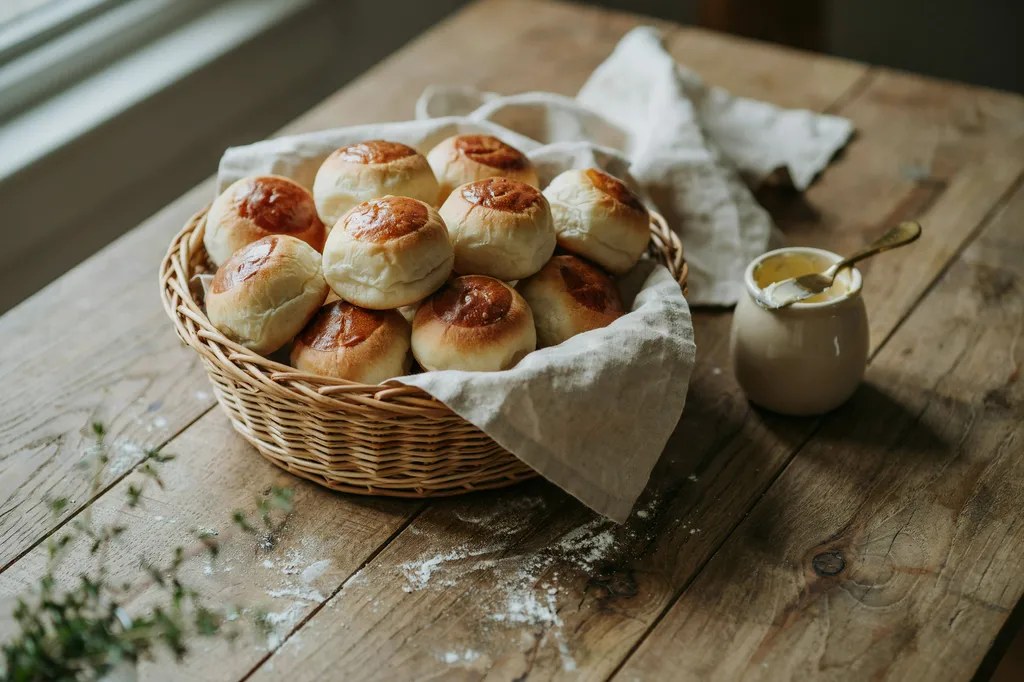
Soft Fresh-Milled Dinner Rolls
Soft, pull-apart dinner rolls made with 100% freshly milled hard white wheat. Perfect for holidays and family dinners.
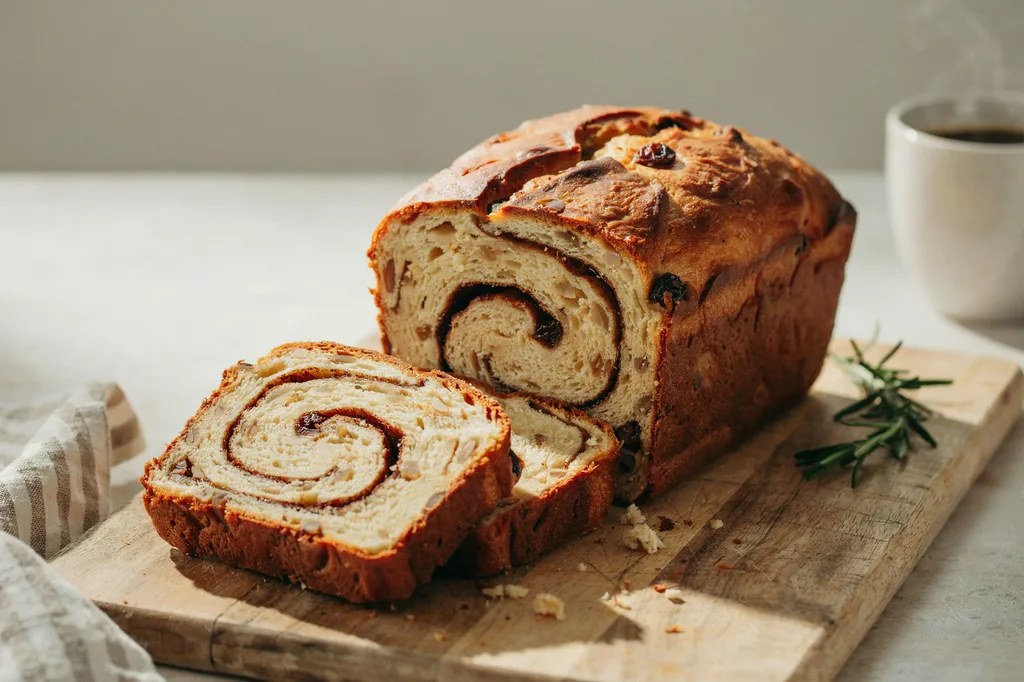
Fresh Milled Cinnamon Swirl Bread
Soft sandwich loaf with a bold cinnamon-sugar swirl, made with 100% fresh milled flour. Yield 1 (9x5) loaf. Prep 30 min, proof 2 hours, bake 40 min.
Related Content
Recommended Grains
Related Techniques
How to Autolyse Fresh Milled Flour
Combine flour and water and let it rest before adding yeast and salt. Bran softens, gluten develops passively, and the final dough is dramatically easier to handle.
How to Increase Hydration Successfully
Raise water in 5% increments, autolyse longer, and lean on stretch and folds instead of kneading.
How to Stretch and Fold Dough
Every 30 minutes during bulk ferment, lift one side of the dough, stretch up, and fold over the top. Rotate 90° and repeat.
Related Troubleshooting
How do I know if my dough is over-proofed?
Recognizing dough that has fermented too long, before it ruins the bake.
Why is my crumb too tight and dense?
Bread with a uniformly tight, small-holed crumb rather than the open, airy structure you wanted.
Why is my fresh milled dough too sticky?
Fresh milled dough sticks to hands, bench, and bannetons and never feels manageable.