
How to Autolyse Fresh Milled Flour
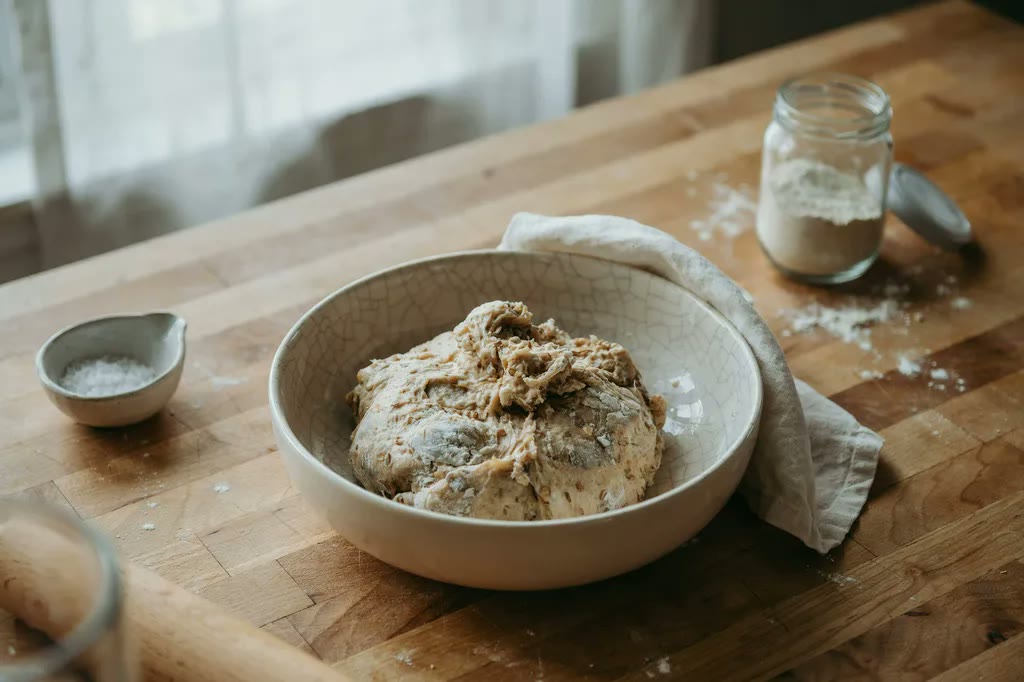
To autolyse fresh milled flour, mix flour and water (no salt, no yeast) and rest 1–2 hours so bran softens and gluten develops on its own.
Key Takeaways
- No salt, no yeast during autolyse
- 1–2 hours minimum for whole wheat
- Transforms dough handling
Summary
Combine flour and water and let it rest before adding yeast and salt. Bran softens, gluten develops passively, and the final dough is dramatically easier to handle.
Steps
- 1
Combine flour and 90% of the recipe water in a bowl.
- 2
Mix until no dry flour remains.
- 3
Cover and rest at room temp for 1–2 hours (whole wheat) or up to overnight (refrigerated).
- 4
Add yeast, salt, and remaining water; continue with the recipe.
Related Content
Related Grains
Related Recipes
Fresh-Milled Pizza Dough
A 24-hour cold-fermented 100% fresh-milled pizza dough with crisp edges, a tender chew, and a deep wheaty flavor.
Fresh-Milled Sourdough Boule
A high-hydration, 100% fresh-milled sourdough boule with an open crumb, deep flavor, and a crackly crust — built around an autolyse and four sets of stretch-and-folds.
Hard Red Wheat Sandwich Bread (100% Fresh-Milled)
A soft, sliceable sandwich loaf made entirely from fresh-milled hard red wheat. Higher hydration and a long autolyse tame the bran so you get a tender crumb without sifting.
Beginner Fresh Milled Sandwich Bread
A soft, tall, freezer-friendly sandwich loaf made with 100% fresh milled hard white wheat.
Fresh-Milled Focaccia (High-Hydration Hard White Wheat)
A pillowy, dimpled focaccia made from 100% fresh-milled hard white wheat. High hydration and a long cold ferment soften the bran into a crumb that rivals 00 flour focaccia.
Hard White Whole Wheat Sandwich Bread
A mild, soft 100% fresh-milled hard white wheat sandwich loaf — the easiest entry point for switching a household from store-bought bread.
100% Whole Wheat Sourdough
A deeply flavored sourdough loaf made entirely from fresh milled hard red wheat.
Related Troubleshooting
Why does my loaf crumble when sliced?
Slices fall apart, especially the heel.
Why does my bread taste too yeasty?
Bread has a strong, alcoholic, or beer-like yeast flavor that overpowers the grain.
Why is my crumb tough and chewy?
Bread crumb is dense, rubbery, or jaw-tiringly chewy rather than soft and tender.
Why isn't my sourdough sour enough?
Sourdough bakes well but lacks the tangy sour flavor expected from naturally leavened bread.
Why is my fresh milled dough rising so slowly?
Fresh milled dough rises but takes far longer than expected to show visible volume change.
Why is my sourdough starter not doubling?
A sourdough starter feeds normally but fails to reliably double in volume between feedings.
Why does my fresh milled bread taste bland?
Loaf is well-baked and well-structured but lacks the deep, complex flavor expected from whole-grain fresh milled flour.
Why is my crust too thick or too hard?
A crust so thick, hard, or chewy that it overshadows the crumb.
Why is my loaf gummy inside?
The crust looks done but the inside of the loaf is sticky, paste-like, or wet to the touch.