
Panettone
Prep
120 min
Bake
50 min
Total time
2 hr 50 min
Hydration
60%
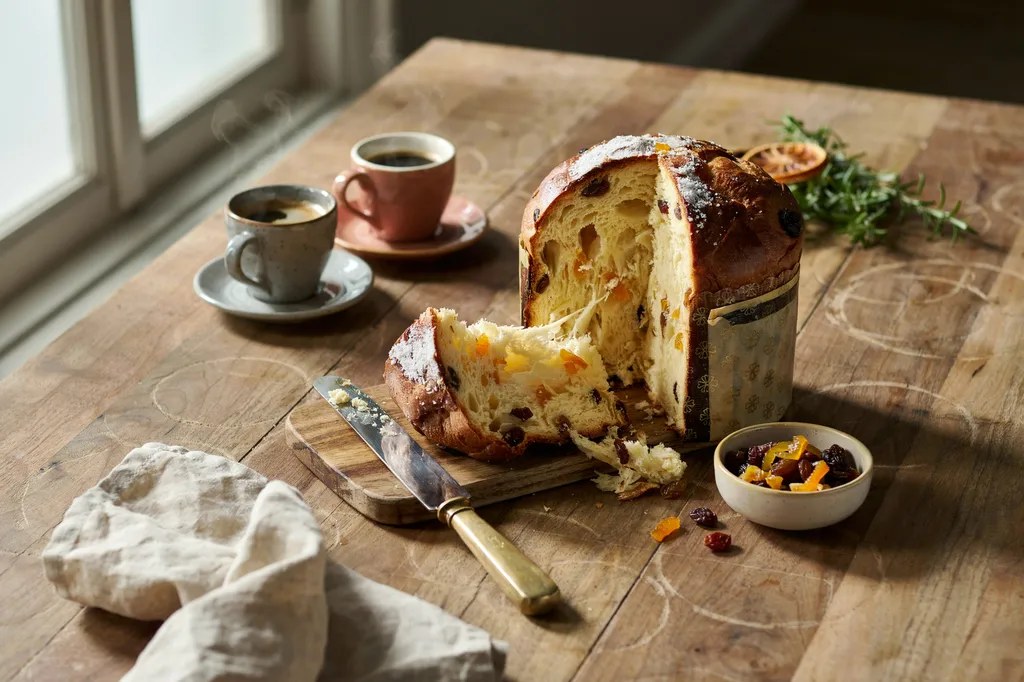
An achievable home-baker's panettone made with 100% freshly milled hard white wheat, candied citrus, raisins, and a long, slow ferment. Tall, domed, and dramatically tearable — not the bakery-grade 24-hour version, but a true panettone for a Christmas morning table.
Key Takeaways
- Use a paper panettone mold — the dough is too rich for an ordinary pan.
- Cold ferment 12–18 hours is essential for flavor and structure.
- Hanging upside down after baking prevents the tall loaf from collapsing.
- Internal temp 200°F is your only doneness check — toothpicks deceive in enriched dough.
- Sourdough panettone is a separate project; this is the home-baker's yeast version.
About this recipe
A traditional panettone takes 48 hours and a very strong sourdough starter. This is the home-baker's version: still very rich, still distinctly panettone, but achievable in a single weekend with active dry yeast and a long cold ferment. The loaf is enriched far beyond ordinary bread — eggs, butter, and sugar make the dough soft and slow to ferment. Fresh milled hard white wheat surprises here, contributing structure that supports the tall dome without collapsing. The dough goes into a tall paper panettone mold (sold online or at baking supply stores) for the iconic shape. The most distinctive panettone step is hanging it upside-down after baking. This prevents the tall loaf from collapsing under its own weight as it cools. Skewer the bottom with two long knitting needles or bamboo skewers and suspend between two stacks of books.
Ingredients
- Soak: raisins120 g
- Soak: candied orange and lemon peel180 g
- Soak: warm water or rum60 g
- Dough: freshly milled hard white wheat flour500 g
- Dough: whole milk (warm)150 g
- Dough: instant yeast8 g
- Dough: sugar100 g
- Dough: honey30 g
- Dough: egg yolks5 large
- Dough: whole egg1
- Dough: softened butter180 g
- Dough: fine sea salt8 g
- Dough: vanilla extract10 g
- Dough: zest of 1 orange + 1 lemon
Instructions
- 1
Soak raisins and peel in warm water or rum for 30 minutes. Drain.
- 2
Whisk warm milk, yeast, honey, sugar, yolks, whole egg, vanilla, and zest in a large bowl.
- 3
Add flour and salt. Mix shaggy.
- 4
Knead 5 minutes in a stand mixer.
- 5
Add butter a tablespoon at a time, kneading until each is absorbed. Knead 10 more minutes — the dough should be soft, glossy, and pull cleanly from the bowl.
- 6
Fold in drained fruit by hand. Just to distribute.
- 7
Cover and refrigerate 12–18 hours (cold ferment is essential).
- 8
Turn out cold dough. Shape into a tight ball: stretch the edges into the center and pinch closed at the bottom. Place pinched-side down in a paper panettone mold (1 lb size).
- 9
Cover and proof 6–8 hours at warm room temperature (the rich, cold dough rises slowly) — until the dough has risen to within 1 inch of the rim.
- 10
Preheat oven to 350°F (175°C).
- 11
Score an X across the top with a sharp blade. Optionally, place a small pat of cold butter in the center.
- 12
Bake 45–55 minutes until deeply golden and the internal temperature reads 200°F (93°C). Tent with foil if browning too fast.
- 13
Within 2 minutes of leaving the oven, skewer 2 long knitting needles or bamboo skewers horizontally through the bottom of the loaf (still in its paper mold).
- 14
Suspend upside-down between two stacks of books / two glasses / chair backs. Hang 4 hours minimum (overnight is fine).
- 15
Right-side up to slice. Keeps 3+ days wrapped at room temperature.
fresh flour baking guide for beginners — hydration, gluten development, and grain choice tips that make this recipe work.
Learn about this grain: Hard White Wheat guide — flavor, milling notes, baking tips, and four in-depth guides on hydration, storage, and common mistakes. Or browse more Hard White Wheat recipes.
Learn a technique
All guides →- Bulk Fermentation with Fresh-Milled FlourFresh-milled flour ferments faster than commercial flour. Watch the dough, not the clock, and end bulk fermentation when volume has grown 50–75%.
- How To Build Gluten With Fresh Milled FlourGluten development in fresh-milled flour is a different craft than in commercial white flour. White-flour doughs love aggressive kneading, slap-and-folds, and stand mixers on high — the smooth endosperm forms long uninterrupted gluten strands quickly. Fresh-milled flour cannot work that way because the bran physically interrupts every gluten strand it touches. The bakers who get gorgeous open crumb out of fresh flour all do the same thing: hydrate fully, rest patiently, fold gently, and choose the right grain. This guide walks through the science and the technique.
Related recipes
Browse all recipes →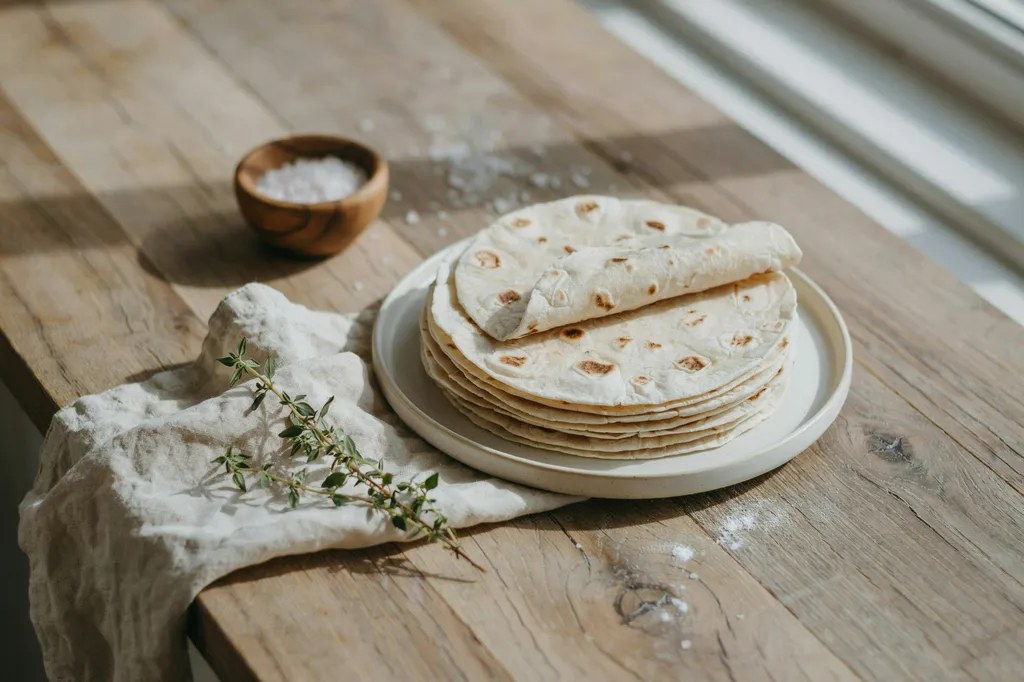
Fresh Milled Flour Tortillas
Fresh milled flour tortillas put store-bought to shame. The dough takes 10 minutes, no yeast, no proof — just mix, rest 30 minutes, roll, and griddle. The result is a soft, pliable tortilla with real wheat flavor that wraps without cracking. The key to soft tortillas is a small amount of fat and hot (not boiling) water. The fat coats the proteins and prevents toughness; hot water relaxes the dough so it rolls thin without springing back. Lard is traditional and best, but butter or neutral oil work well. Keep the heat moderate and don't overcook. Tortillas should puff slightly, develop a few brown spots, and remain flexible. Stack and wrap in a towel as you go so they steam soft. Makes 8 tortillas.
Christmas Bread
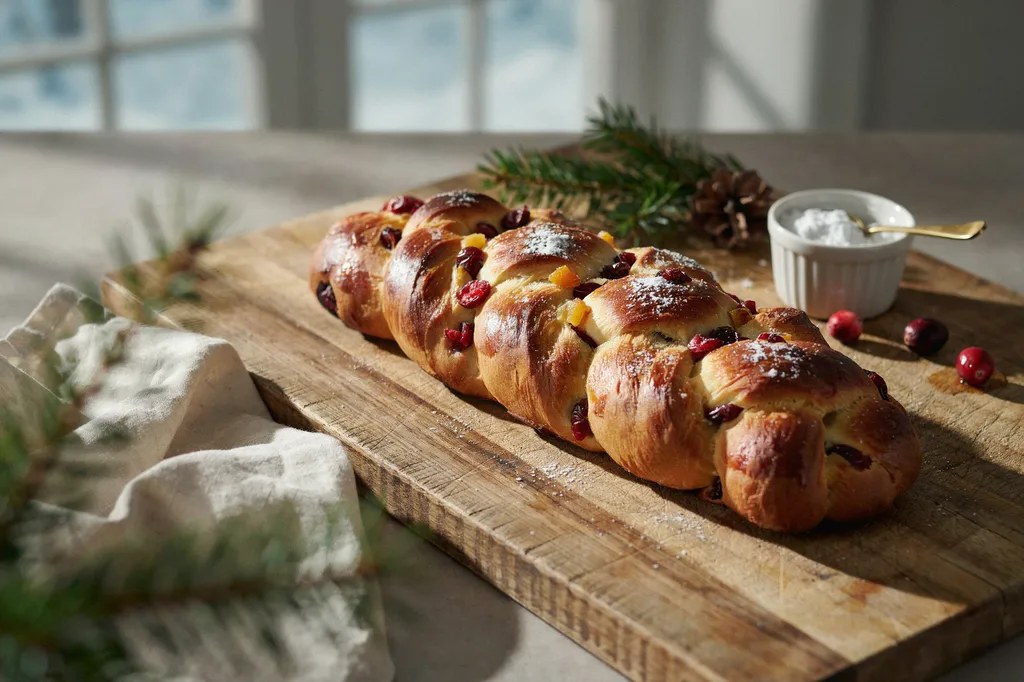
This braided Christmas bread is a centerpiece loaf — slightly sweet, lightly spiced, beautifully shaped, and welcome on any holiday table. Less assertive than stollen, more polished than dinner rolls, it splits the difference and pairs equally well with breakfast butter and Christmas dinner. The dough is a classic enriched bread: milk, eggs, butter, sugar. Cardamom and orange zest provide a holiday warmth without being overpowering. A 4-strand braid sounds intimidating but is genuinely simple — see the step-by-step instructions. Brush twice with egg wash for the deepest, most golden crust, and finish with pearl sugar for festive crunch.
Christmas Stollen
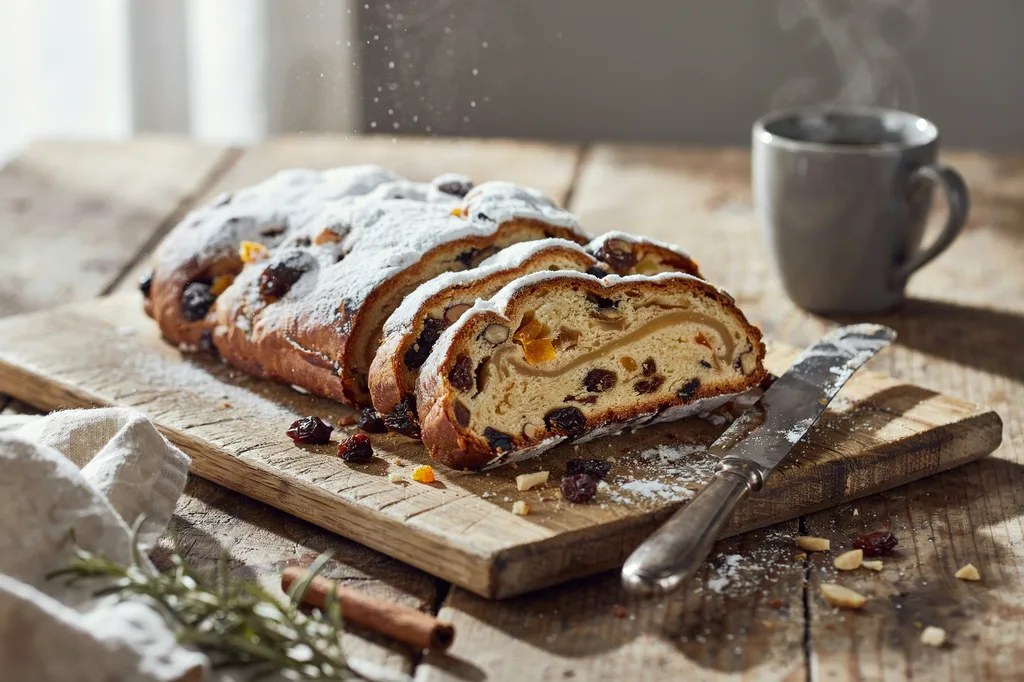
Stollen is one of the great Christmas breads — a German tradition dating to at least the 14th century. The loaf is dense, buttery, soaked with rum-plumped fruit, wrapped around a log of marzipan, and finished with a thick coating of butter and powdered sugar that protects it for weeks of holiday slicing. This is the project bake of the season. Plan to make it 5–7 days before you want to serve it: stollen genuinely improves with rest. The flavors meld, the butter coating sets, and the crumb develops the slightly drier, denser character that defines the bread. Fresh milled hard white wheat gives the dough wholesomeness without overpowering the rich fillings. Soak the fruit in dark rum overnight — the alcohol mostly evaporates during baking but the flavor stays.
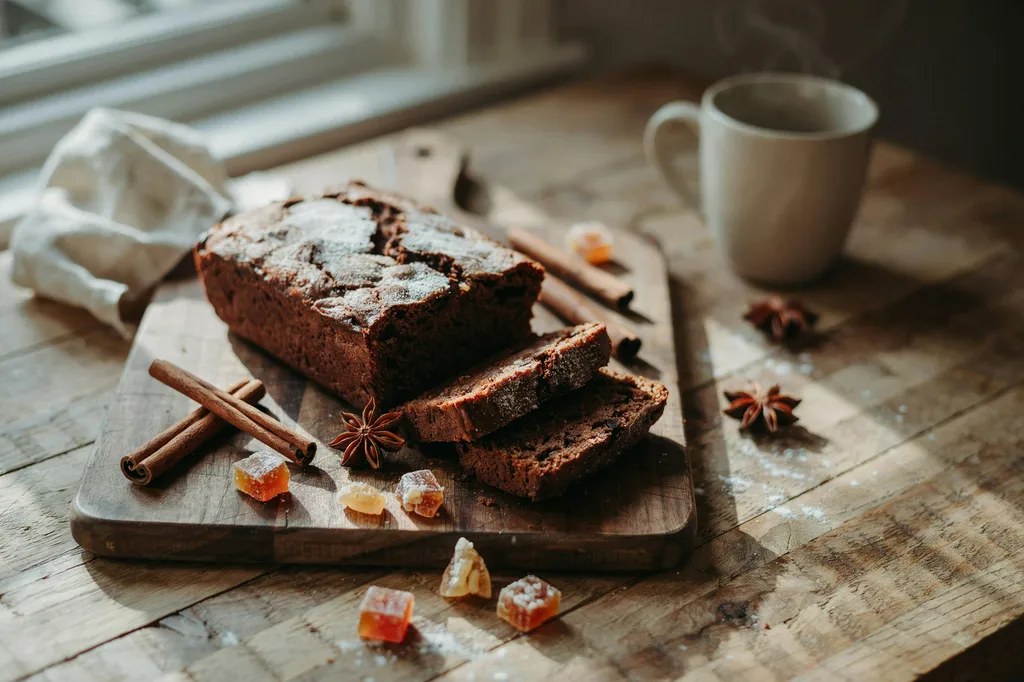
Gingerbread Loaf
Gingerbread is the unsung holiday loaf — easier than stollen, more impressive than banana bread, and the smell alone justifies the bake. Fresh milled hard white wheat gives this gingerbread a real wholeness that white flour cannot — the wheat stands up to the assertive molasses and spice instead of fading into the background. This is a classic dark gingerbread: heavy on molasses, generous with spice, finished with a dusting of powdered sugar. Slice thick and serve with a dollop of whipped cream or lightly sweetened mascarpone for the holiday table. Plain with butter and a cup of coffee for breakfast on Boxing Day.
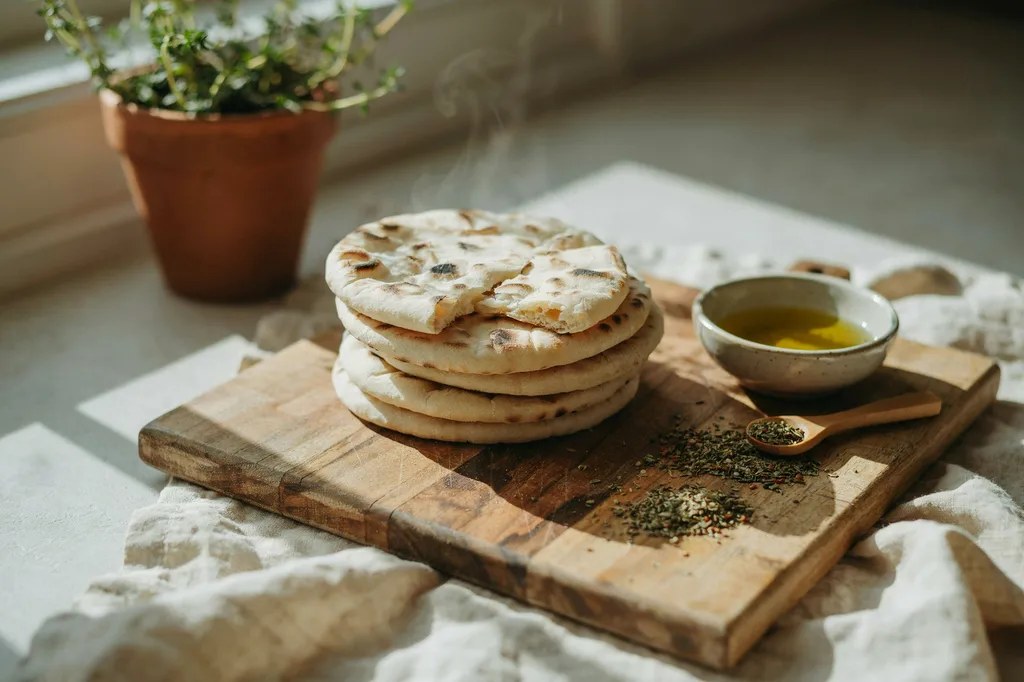
Fresh Milled Pita Bread
Pita is one of the great breads to bake at home: fast, flexible, and dramatic. The moment a thin disk hits a 500°F surface and balloons into a perfect pocket is one of the most satisfying sights in baking. Fresh milled hard white wheat makes pita that store-bought cannot match — sweet, nutty, soft, and substantially more flavorful. The dough comes together in one bowl, ferments once, and bakes in 3 minutes per round. Make a batch on Sunday for sandwiches all week. The pocket comes from steam expanding rapidly in a sealed, thin disk. Three things make it work: a fully preheated baking surface (steel, stone, or heavy upside-down sheet pan), even rolling, and not pricking or damaging the surface. If your first pita doesn't puff, increase oven temperature and roll thinner.
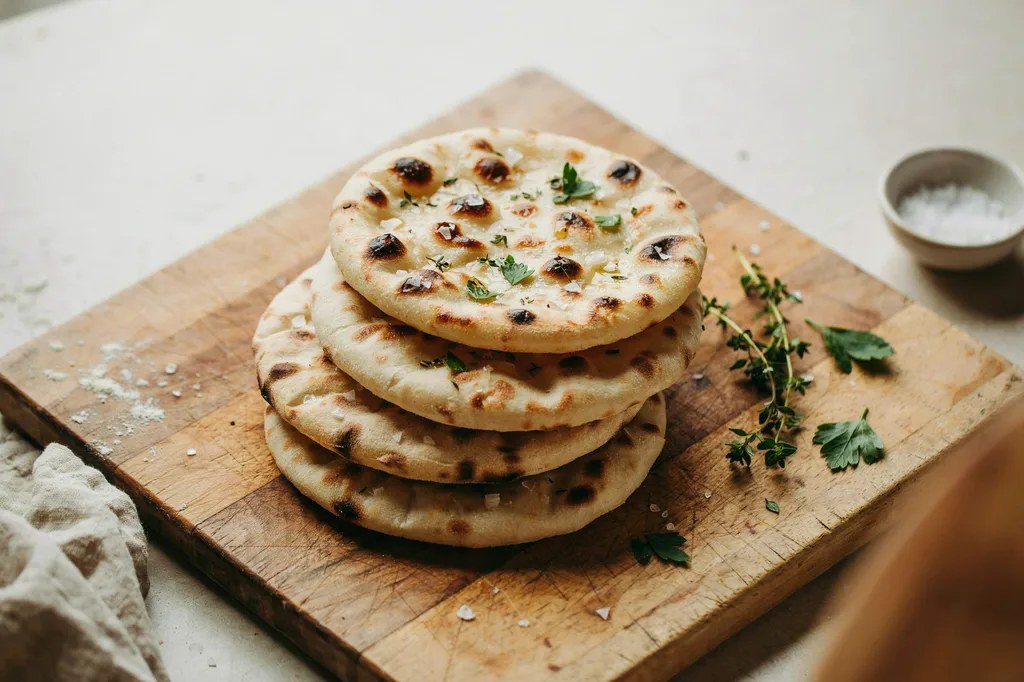
Fresh Milled Flatbread
Every fresh milled kitchen needs a weeknight flatbread. This is mine: a single-rise dough, dimpled with fingertips, drizzled with olive oil, scattered with herbs and flaky salt. It bakes flat with crispy edges and a soft interior, the perfect partner for hummus, baba ganoush, or a Sunday soup. The dough is straightforward: flour, water, yeast, olive oil. Hydration sits at 70% — enough to give an open, slightly chewy crumb without making rolling impossible. A 60-minute autolyse before adding yeast and salt softens the bran and gives you a much tenderer crust. Makes 4 personal-sized flatbreads.
Related Content
Recommended Grains
Related Techniques
Bulk Fermentation with Fresh-Milled Flour
Fresh-milled flour ferments faster than commercial flour. Watch the dough, not the clock, and end bulk fermentation when volume has grown 50–75%.
How To Build Gluten With Fresh Milled Flour
Gluten development in fresh-milled flour is a different craft than in commercial white flour. White-flour doughs love aggressive kneading, slap-and-folds, and stand mixers on high — the smooth endosperm forms long uninterrupted gluten strands quickly. Fresh-milled flour cannot work that way because the bran physically interrupts every gluten strand it touches. The bakers who get gorgeous open crumb out of fresh flour all do the same thing: hydrate fully, rest patiently, fold gently, and choose the right grain. This guide walks through the science and the technique.