
Fresh Milled Flour Hydration Guide
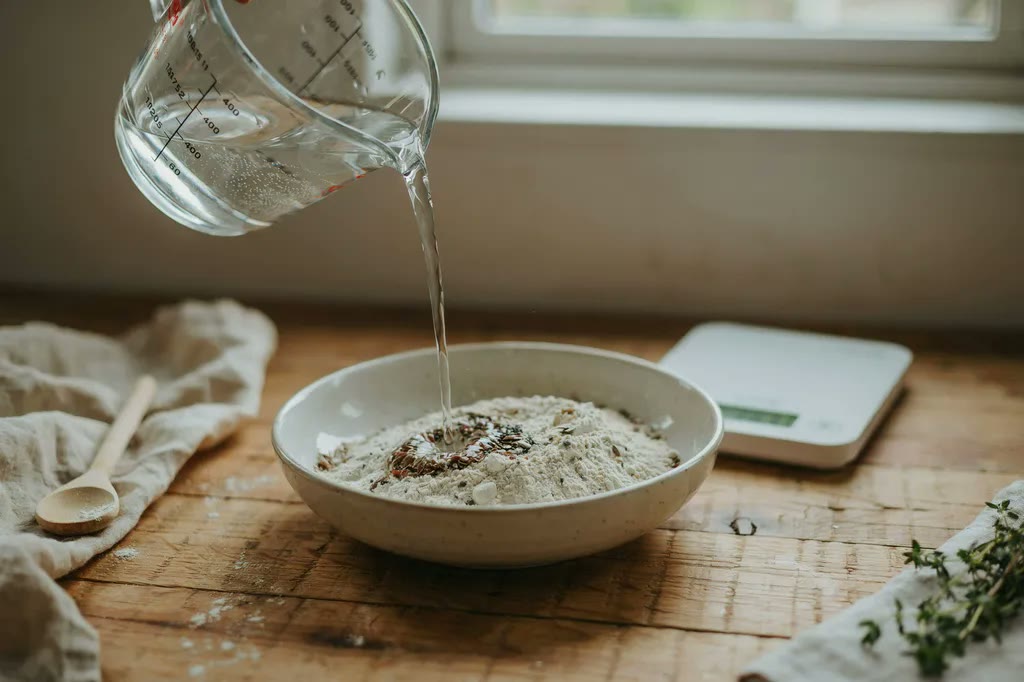
Fresh-milled flour typically absorbs 5–15% more water than commercial bread flour, so start every recipe by increasing hydration by 5%, rest the dough for 20–30 minutes, and add more water in 10–20 gram increments until the dough is supple but not sticky.
Key Takeaways
- Bran absorbs water slowly — let the dough rest for 20–30 minutes before judging hydration.
- Start every fresh-milled conversion at +5% hydration and adjust by feel from there.
- Hard red wheat drinks the most water; einkorn drinks the least.
- A properly hydrated fresh-milled dough is tacky to the touch but releases cleanly from a wet hand.
- Under-hydrated dough produces dense, dry crumb; over-hydrated dough produces gummy crumb and flat loaves.
Summary
Hydration is the single variable that fixes more fresh-milled bread problems than any other adjustment. Bagged bread flour is engineered to behave predictably — milled to a uniform fine particle, aged for weeks, and stripped of the thirsty bran and germ. Fresh-milled flour is the opposite: it contains every part of the kernel, and the intact bran soaks up water slowly. The same recipe that produces a slack, sticky white-flour dough produces a dry, tight fresh-milled dough unless you increase the liquid. This guide explains why hydration matters more for fresh flour, how each grain behaves, how to read dough texture by feel, how to convert standard recipes, and how to troubleshoot the most common hydration symptoms.
Steps
- 1
Why hydration matters more for fresh-milled flour. Commercial white flour is mostly endosperm — fine starch and gluten-forming proteins that wet quickly and evenly. Fresh-milled flour contains the bran (the outer layer) and germ (the embryo). Bran is essentially edible fiber, and like all fiber it absorbs water slowly and continuously. If you mix a fresh-milled dough at a standard 65% hydration, the endosperm grabs the water first and the bran is still thirsty hours later — so the bran pulls moisture from the crumb during baking and the loaf turns out dry. The fix is more water from the start.
- 2
How each grain absorbs water. Hard red wheat is the thirstiest mainstream grain — expect 75–82% hydration for boules. Hard white wheat behaves similarly, 72–78%. Spelt absorbs slightly less and faster, 68–72%. Einkorn is the outlier: its low-quality gluten cannot hold high hydration, so stay between 60–65%. Rye is unique because it contains pentosans that hold huge amounts of water; a 100% rye dough can run 85–100% hydration. The bran percentage drives this — finely sifted high-extraction flour drinks less than whole flour from the same berry.
- 3
The autolyse rest. The single most useful hydration tool is also the simplest: mix flour and water, walk away for 20–30 minutes, then judge texture. During the rest, the bran fully hydrates, the gluten begins forming without any work from you, and the dough transforms from rough and gritty to smooth and extensible. After autolyse, a dough that felt dry usually feels just right. If it still feels dry after the rest, add water in 10–20 gram increments, mixing each addition fully before judging.
- 4
Reading dough texture by feel. A properly hydrated fresh-milled bread dough should feel tacky but not sticky — it grips your fingertips for a moment, then releases cleanly if your hand is wet. The classic windowpane test (stretch a small piece thin enough to see light through) takes longer with fresh-milled flour because the bran constantly nicks the gluten network. Most fresh-milled doughs cannot produce a perfect windowpane and that is fine; aim for a translucent stretch with a few small tears.
- 5
Adjusting standard recipes. To convert a 100% white-flour recipe to 100% fresh-milled, follow this sequence: increase hydration by 5% as your starting point, plan a 30-minute autolyse, expect a 10–20% longer bulk fermentation, and reduce baking time by about 5 minutes since the dough enters the oven slightly wetter. After your first bake, evaluate: if the crumb is dense and dry, increase hydration another 3–5% next time; if the crumb is gummy and the loaf is flat, decrease hydration by 3%.
- 6
Hydration in different applications. Sandwich bread: 70–75% hydration with butter and milk to soften the crumb. Artisan boule: 75–82% hydration for an open crumb. Pizza dough: 65–70% for a crisp crust, 72–75% for a tender Neapolitan style. Pancakes and waffles: thinner is fine — fresh-milled batters can run nearly liquid because the bran thickens as it sits. Cookies: stay close to the original recipe; cookies are forgiving and over-hydration spreads them flat.
- 7
Hydration troubleshooting — dense, dry crumb. The bread looks short, the crust is thick, the crumb has tight, even bubbles and feels dry on the tongue. The cause is almost always under-hydration. Increase water by 5% next bake. Confirm by feel during mixing: if the dough cleans the bowl easily and feels firm like clay, it is too dry.
- 8
Hydration troubleshooting — gummy crumb. The bread comes out flat with a wide, flat top, and the crumb feels sticky between your fingers even when fully cool. This is over-hydration relative to your gluten strength, or under-baked. Reduce water by 3%, give an extra 5 minutes in the oven, and confirm internal temperature reaches 205–210°F.
- 9
Hydration troubleshooting — sticky during shaping. The dough is properly hydrated but feels unmanageable on the bench. The fix is technique, not hydration: dust your hands and the bench with rice flour (it does not absorb into the dough), use a bench scraper to lift rather than your hands, and shape with confidence and speed. Wet hands release sticky dough cleanly; floured hands often make it worse.
- 10
Practical workflow. Always weigh in grams, never volume. Start at +5% over the original recipe. Mix, rest 30 minutes, then judge. Add water cold in winter, room temperature in summer. Keep a baker's notebook with the grain, the season, the kitchen temperature, and the final hydration that worked — your future loaves will repay the effort within a few weeks.
Related Content
Related Grains
Spelt
An ancient hexaploid wheat with mellow flavor and easy hydration.
Einkorn
The oldest cultivated wheat, prized for digestibility and rich flavor.
Hard White Wheat
A milder, lighter whole wheat that bakes up tender and golden.
Hard Red Wheat
A high-protein modern wheat ideal for hearty whole-grain breads.
Rye
Fresh-milled rye delivers deep, tangy flavor and chewy crumb — a low-gluten grain that powers sourdough, dense sandwich loaves, crackers, and the classic breads of Northern Europe.
Related Recipes
Fresh-Milled Pizza Dough
A 24-hour cold-fermented 100% fresh-milled pizza dough with crisp edges, a tender chew, and a deep wheaty flavor.
Fresh-Milled Artisan Hearth Bread
A rustic Dutch-oven loaf made with 100% freshly milled hard red and hard white wheat. Open crumb, crackly crust, leavened with commercial yeast.
Beginner Fresh Milled Sandwich Bread
A soft, tall, freezer-friendly sandwich loaf made with 100% fresh milled hard white wheat.
Honey Wheat Bread
Baking with freshly milled hard white wheat flour transforms an everyday recipe into something extraordinary. Within minutes of milling, whole-grain flour is bursting with natural oils and a sweet wheaty aroma — the part that fades first once flour sits — and it still carries the whole berry: bran, germ, and endosperm. Commercial white flour has the bran and germ removed and is stabilized for months of shelf life — fresh milling skips all of that, so you bake with the whole grain and with the aroma still in it. This honey wheat bread is the perfect entry point for new fresh-milled flour bakers. Hard white wheat is naturally mild, sweet, and lighter in color than hard red wheat, which makes it a forgiving choice for sandwich loaves. Honey adds tenderness, a touch of caramel sweetness, and helps the bread stay soft for days. Because fresh-milled flour absorbs water more slowly than store-bought flour, this recipe uses a generous autolyse rest so the bran can fully hydrate before kneading — the difference in crumb tenderness is dramatic. If this is your first whole-wheat loaf, plan to bake it on a quiet morning. Fresh-milled doughs feel a little tackier than white flour doughs at first; resist the urge to add more flour. After the autolyse you'll find it transforms into a smooth, supple dough that's easy to shape. Bake it once at the listed hydration before adjusting — the formula is dialed in for whole hard white wheat at room-temperature water.
100% Whole Wheat Sourdough
A deeply flavored sourdough loaf made entirely from fresh milled hard red wheat.