
Fresh Milled Flour Troubleshooting Guide
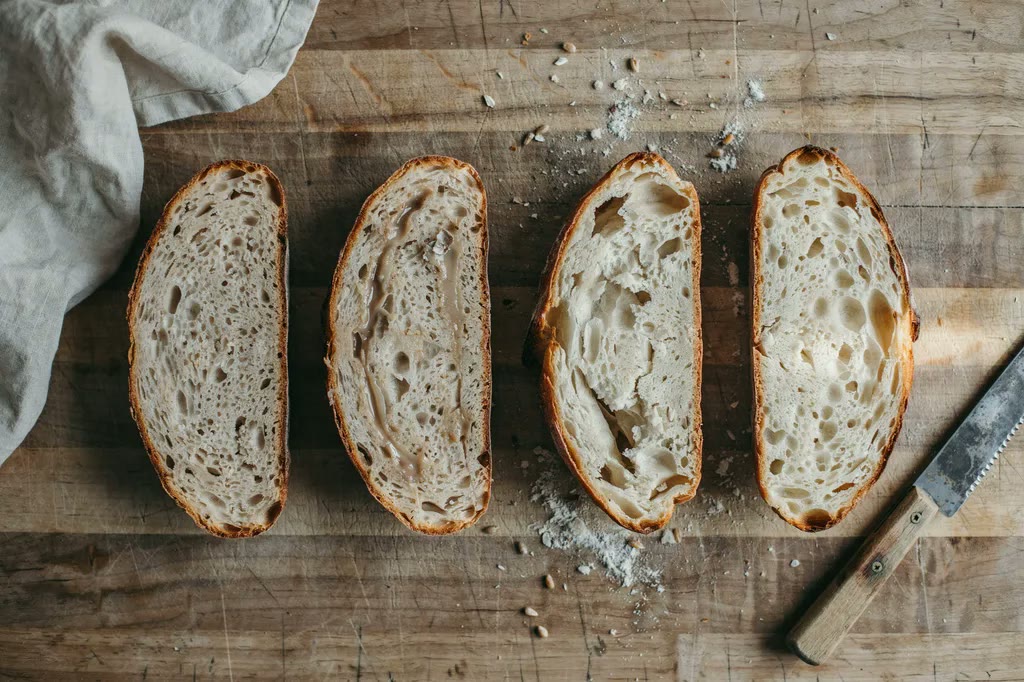
Most fresh-milled bread problems trace to one of six causes — under-hydration, under-fermentation, overproofing, weak gluten, wrong grain choice, or under-baking — and each has a specific visual symptom and adjustment that fixes it on the next bake.
Key Takeaways
- Diagnose by symptom first, then test one variable per bake.
- Hydration fixes more problems than any other adjustment.
- Fermentation overshoot is the most common fresh-milled mistake — watch the dough, not the clock.
- Use an instant-read thermometer; bread is done at 200–210°F internal.
- Keep a baker's notebook so today's fix becomes tomorrow's repeatable recipe.
Summary
Fresh-milled bread fails in predictable ways. After thousands of loaves, the same handful of symptoms appear over and over: dense crumb, dry crumb, gummy crumb, poor rise, collapsed top, pale crust. This guide is organized by symptom so you can jump straight to your problem, see the most likely cause, and apply the specific fix on your next bake. If multiple symptoms apply, work through them in the order listed — hydration first, then fermentation, then technique. For deeper coverage of any single issue, the linked grain hubs and technique guides go further.
Steps
- 1
## Dense bread. Symptom: short loaf, tight even crumb, dry on the tongue, thick crust. Most likely causes in order: under-hydration (add 5% more water next bake), under-fermentation (extend bulk by 30%), wrong grain (confirm hard wheat for yeasted bread), or volume-scoop flour weighing 20% more than the recipe assumed (always weigh). First fix to try: add 25–30g more water per 500g flour, with a 30-minute autolyse after mixing.
- 2
## Dry bread that crumbles. Symptom: crumb falls apart when sliced, especially on day two. Causes: under-hydration (most common), over-baking, or low-fat recipe paired with fresh-milled flour. Fix sequence: increase hydration by 5%, reduce bake time by 3–5 minutes, and add 20g butter or 15g oil to the recipe to help the bran hold moisture.
- 3
## Gummy crumb. Symptom: bread feels sticky between your fingers even when fully cooled, often with a wide flat top. Causes in order: under-baked (most common — confirm 205–210°F internal temperature on an instant-read thermometer), over-hydrated relative to gluten strength, or too much starter or yeast pushing fermentation past the gluten's ability to hold. Fixes: extend bake 5 minutes, reduce hydration 3%, or reduce starter to 18–20% of flour weight.
- 4
## Poor rise — flat loaf out of the oven. Symptom: dough rose during bulk but barely lifted in the oven. Causes: overproofed in the final proof (gluten gave up before baking), under-developed gluten, oven temperature too low, or cold dough into a cold oven. Fixes: shorten final proof by 20%, do an extra stretch-and-fold during bulk, preheat to the recipe temperature plus 25°F and reduce after the loaf is in, and always confirm the dough finger-poke test (gentle indent springs back slowly) before baking.
- 5
## Overproofed dough. Symptom: dough has more than doubled, surface looks slack and bubbly, smells slightly alcoholic, finger poke leaves a permanent dent. The fastest recovery is to reshape and proof briefly again, but the loaf will be inferior. Next-bake prevention: reduce bulk time by 20%, lower kitchen temperature by 5°F, or reduce starter/yeast by 25%.
- 6
## Underproofed dough. Symptom: bread has tight crumb concentrated at the bottom, large bubble or tunnel near the top crust, dense overall. Causes: bulk ended too early, final proof too short, or cold kitchen. Fixes: extend bulk until dough has visibly grown 60–80%, extend final proof until finger poke leaves a slight slow-bouncing dent, and consider proofing in a slightly warmer spot (the oven with just the light on works well).
- 7
## Collapsed loaf — dome falls during or after baking. Symptom: loaf rose tall, then sank in the oven or as it cooled, leaving a wrinkled or dipped top. Causes in order: overproofed before baking, weak gluten relative to hydration, too much steam in the oven keeping the crust soft too long. Fixes: shorten final proof, add an extra stretch-and-fold during bulk, and remove steam (open the lid of a Dutch oven, or remove the steam pan) after the first 15 minutes of bake.
- 8
## Pale crust. Symptom: loaf looks under-baked even though internal temperature is correct. Causes: oven temperature too low, not enough steam at the start (steam delays crust formation and allows browning), too little sugar in the dough, or under-fermented (less natural sugar produced). Fixes: preheat the oven 20 minutes longer, add steam for the first 15 minutes, brush the dough with milk or egg wash before baking, or extend bulk fermentation.
- 9
## Excessive open holes or tunnels. Symptom: irregular giant holes near the top crust, dense bottom. Causes: under-shaped (gluten was not tightened enough during shaping), under-degassed before shaping, or rapid oven spring on top of weak gluten. Fixes: reshape with more confident tightening, gently press the dough flat before final shape, and let the shaped loaf rest 5 minutes before scoring.
- 10
## Bread does not brown. Symptom: pale soft crust even at the end of the recommended bake time. Causes: oven too cool, dough too cold from a long cold retard, or insufficient bake time. Fixes: confirm oven temperature with a thermometer (most home ovens run 10–25°F off), bring cold-retarded dough out 30 minutes before baking, and bake until the internal temperature reaches 205°F regardless of the time on the recipe.
- 11
## Sour or off flavor. Symptom: bread tastes overly sour, alcoholic, or has a bitter aftertaste. Causes: over-fermented (cut bulk by 30%), starter too acidic (refresh more often), or fresh-milled flour past its 24–72 hour peak window (still usable for a week or two, but it will taste flatter). Quick fix: feed your starter twice the day before baking, watch fermentation more carefully, and mill flour the day of baking.
- 12
## Universal first fixes. When you do not know which symptom you have, try these three adjustments together on your next bake: increase hydration by 5%, add a 30-minute autolyse, and reduce bulk time by 20%. These three changes solve roughly two-thirds of all fresh-milled bread problems and give you a cleaner baseline to diagnose anything that remains.
Related Content
Related Grains
Spelt
An ancient hexaploid wheat with mellow flavor and easy hydration.
Einkorn
The oldest cultivated wheat, prized for digestibility and rich flavor.
Hard White Wheat
A milder, lighter whole wheat that bakes up tender and golden.
Hard Red Wheat
A high-protein modern wheat ideal for hearty whole-grain breads.
Rye
Fresh-milled rye delivers deep, tangy flavor and chewy crumb — a low-gluten grain that powers sourdough, dense sandwich loaves, crackers, and the classic breads of Northern Europe.
Related Recipes
Fresh-Milled Artisan Hearth Bread
A rustic Dutch-oven loaf made with 100% freshly milled hard red and hard white wheat. Open crumb, crackly crust, leavened with commercial yeast.
100% Whole Wheat Sandwich Bread
A soft, everyday sandwich loaf made with 100% freshly milled hard white wheat. Beginner-friendly and built for sandwiches and toast.
Beginner Fresh Milled Sandwich Bread
A soft, tall, freezer-friendly sandwich loaf made with 100% fresh milled hard white wheat.
Honey Wheat Bread
Baking with freshly milled hard white wheat flour transforms an everyday recipe into something extraordinary. Within minutes of milling, whole-grain flour is bursting with natural oils and a sweet wheaty aroma — the part that fades first once flour sits — and it still carries the whole berry: bran, germ, and endosperm. Commercial white flour has the bran and germ removed and is stabilized for months of shelf life — fresh milling skips all of that, so you bake with the whole grain and with the aroma still in it. This honey wheat bread is the perfect entry point for new fresh-milled flour bakers. Hard white wheat is naturally mild, sweet, and lighter in color than hard red wheat, which makes it a forgiving choice for sandwich loaves. Honey adds tenderness, a touch of caramel sweetness, and helps the bread stay soft for days. Because fresh-milled flour absorbs water more slowly than store-bought flour, this recipe uses a generous autolyse rest so the bran can fully hydrate before kneading — the difference in crumb tenderness is dramatic. If this is your first whole-wheat loaf, plan to bake it on a quiet morning. Fresh-milled doughs feel a little tackier than white flour doughs at first; resist the urge to add more flour. After the autolyse you'll find it transforms into a smooth, supple dough that's easy to shape. Bake it once at the listed hydration before adjusting — the formula is dialed in for whole hard white wheat at room-temperature water.
100% Whole Wheat Sourdough
A deeply flavored sourdough loaf made entirely from fresh milled hard red wheat.