
How to Sift Fresh Milled Flour
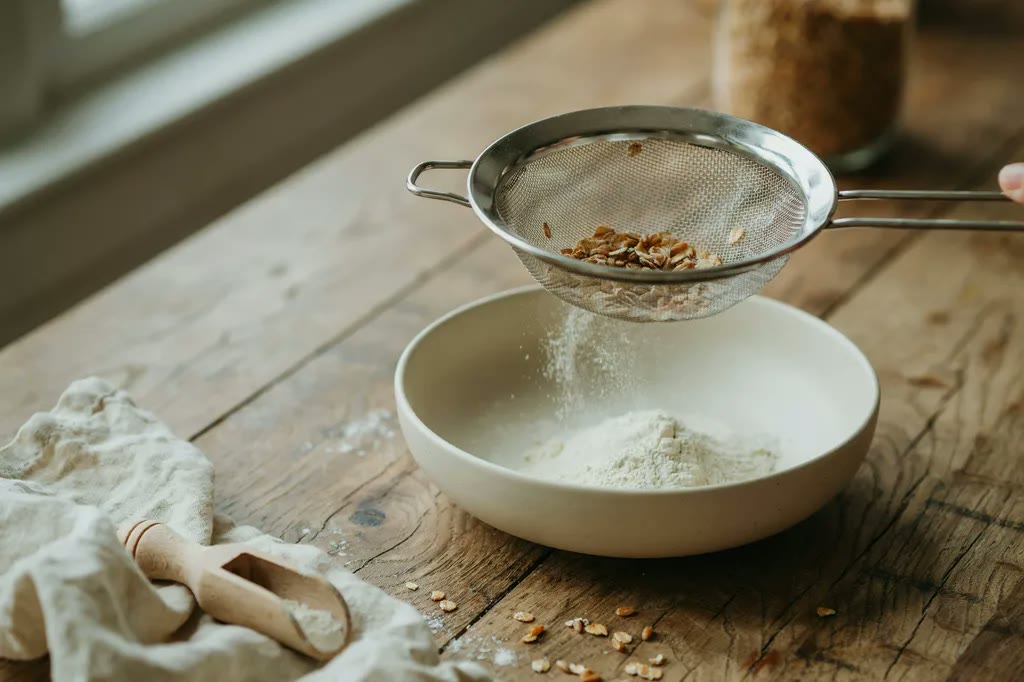
Sifting fresh milled flour through a 50–60 mesh sieve produces a lighter, higher-extraction flour ideal for pastries while preserving most of the nutrition.
Key Takeaways
- 50–60 mesh sieve
- Save the bran
- Great for pastries
Summary
Pass freshly milled flour through a 50 or 60 mesh sieve. Reserve the bran for porridge or rebake it in.
Steps
- 1
Mill berries on a fine setting.
- 2
Sift through a 50-mesh strainer over a bowl.
- 3
Use the fine flour for pastry or as a high-extraction bread flour.
- 4
Save the bran for porridge, granola, or to add back at the end of bulk.
Related Content
Related Grains
Related Recipes
100% Spelt Sandwich Bread
A soft, tender 100% fresh-milled spelt sandwich loaf with a tight even crumb — designed to slice cleanly without crumbling.
Fresh-Milled Dinner Rolls
Soft, pillowy 100% fresh-milled dinner rolls enriched with milk, butter, and egg — pull-apart tender even though they are 100% whole wheat.
Einkorn Pancakes
Light, custardy pancakes made with 100% fresh milled einkorn flour.
Related Troubleshooting
Why does my loaf have a soggy bottom?
The bottom crust of a baked loaf is pale, soft, or gummy instead of crisp and golden.
Why does my fresh milled bread feel gritty?
Crumb feels sandy, crunchy, or gritty on the tongue instead of soft and chewy.
Why is my whole wheat bread so crumbly?
Whole wheat loaves crumble when sliced, fall apart in sandwiches, or do not hold together cleanly.
Why does my fresh milled bread taste bitter?
Bread with a harsh, bitter, or astringent aftertaste rather than sweet, nutty whole-grain flavor.
Why does my bread taste like raw flour?
Bread looks baked but has a chalky, pasty, or raw-flour mouthfeel and aftertaste.
Why is my crust too pale?
A loaf that finishes baking with a soft, blond crust instead of a deep golden or mahogany color.