
Fresh Milled Naan
Prep
20 min
Bake
12 min
Total time
32 min
Hydration
65%
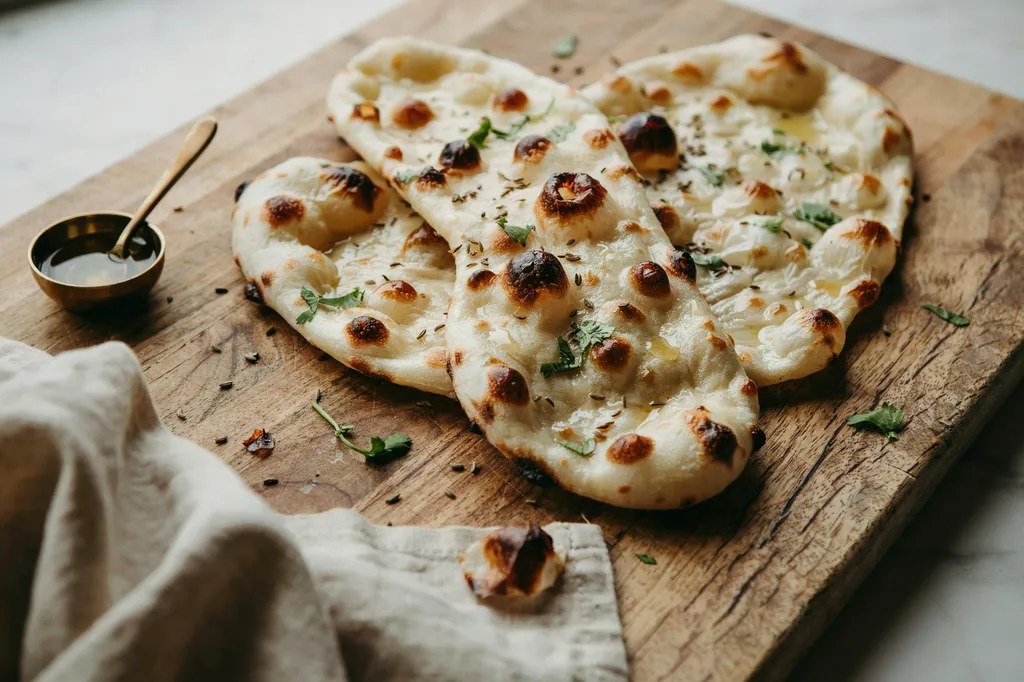
Soft, charred, garlic-buttered naan made from 100% freshly milled hard white wheat. Yogurt enriches the dough; a screaming-hot cast iron skillet mimics a tandoor oven. Eight rounds in under two hours.
Key Takeaways
- Yogurt + fresh milled flour = uniquely tender, slightly tangy naan.
- A screaming-hot cast iron skillet is the home cook's tandoor.
- Brush with garlic butter the second they come off the heat.
- Stack under a towel so they steam soft instead of crisping up.
- Use within hours or reheat in a dry skillet to revive.
About this recipe
Naan made at home is dramatically better than restaurant takeout, and fresh milled flour takes it another step further. Yogurt in the dough creates a soft, slightly tangy crumb. A blisteringly hot cast iron skillet provides the heat and char that traditionally comes from a tandoor. The dough is enriched with yogurt and butter, which makes it both tender and flexible — exactly the texture you want for scooping up curry or wrapping kebab. Brush each naan with garlic butter and fresh parsley straight off the heat for the full effect. Makes 8 large naan.
Ingredients
- Freshly milled hard white wheat flour500 g
- Whole milk yogurt (full fat)200 g
- Water (warm)125 g
- Instant yeast5 g
- Honey15 g
- Melted butter30 g (plus extra for brushing)
- Fine sea salt10 g
- Garlic (minced) and parsley (chopped) for brushingto taste
Instructions
- 1
Whisk water, yeast, and honey in a large bowl. Bloom 5 minutes.
- 2
Add yogurt and melted butter. Whisk.
- 3
Add flour and salt. Mix until shaggy.
- 4
Knead 6–8 minutes until smooth and elastic.
- 5
Cover and bulk ferment 75–90 minutes until doubled.
- 6
Divide into 8 equal pieces (about 110 g each). Cover and rest 10 minutes.
- 7
Roll one piece at a time into a teardrop or oval shape, 1/4-inch thick.
- 8
Heat a cast iron skillet over high heat until smoking.
- 9
Lay one naan in the dry skillet. Cook 60–90 seconds — bubbles will rise and the bottom will char.
- 10
Flip and cook 30–60 more seconds.
- 11
Brush hot naan with melted garlic butter and parsley. Stack under a towel.
- 12
Repeat with remaining dough.
beginner home milling guide — hydration, gluten development, and grain choice tips that make this recipe work.
Learn about this grain: Hard White Wheat guide — flavor, milling notes, baking tips, and four in-depth guides on hydration, storage, and common mistakes. Or browse more Hard White Wheat recipes.
Learn a technique
All guides →- How to Autolyse Fresh Milled FlourCombine flour and water and let it rest before adding yeast and salt. Bran softens, gluten develops passively, and the final dough is dramatically easier to handle.
- How To Build Gluten With Fresh Milled FlourGluten development in fresh-milled flour is a different craft than in commercial white flour. White-flour doughs love aggressive kneading, slap-and-folds, and stand mixers on high — the smooth endosperm forms long uninterrupted gluten strands quickly. Fresh-milled flour cannot work that way because the bran physically interrupts every gluten strand it touches. The bakers who get gorgeous open crumb out of fresh flour all do the same thing: hydrate fully, rest patiently, fold gently, and choose the right grain. This guide walks through the science and the technique.
- How To Convert White Flour Recipes to Fresh Milled FlourMost fresh-milled disasters happen on the conversion. A baker takes a beloved white-flour recipe, swaps in fresh flour cup-for-cup, follows the original times, and pulls out a dense, dry, or gummy loaf. The recipe was not the problem — fresh-milled flour simply needs five adjustments. This guide walks through the conversion in order: choose the right grain for the recipe type, swap by weight not volume, increase hydration, add an autolyse, expect faster fermentation, and watch out for the four most common conversion errors.
- Fresh Milled Flour Hydration GuideHydration is the single variable that fixes more fresh-milled bread problems than any other adjustment. Bagged bread flour is engineered to behave predictably — milled to a uniform fine particle, aged for weeks, and stripped of the thirsty bran and germ. Fresh-milled flour is the opposite: it contains every part of the kernel, and the intact bran soaks up water slowly. The same recipe that produces a slack, sticky white-flour dough produces a dry, tight fresh-milled dough unless you increase the liquid. This guide explains why hydration matters more for fresh flour, how each grain behaves, how to read dough texture by feel, how to convert standard recipes, and how to troubleshoot the most common hydration symptoms.
Related recipes
Browse all recipes →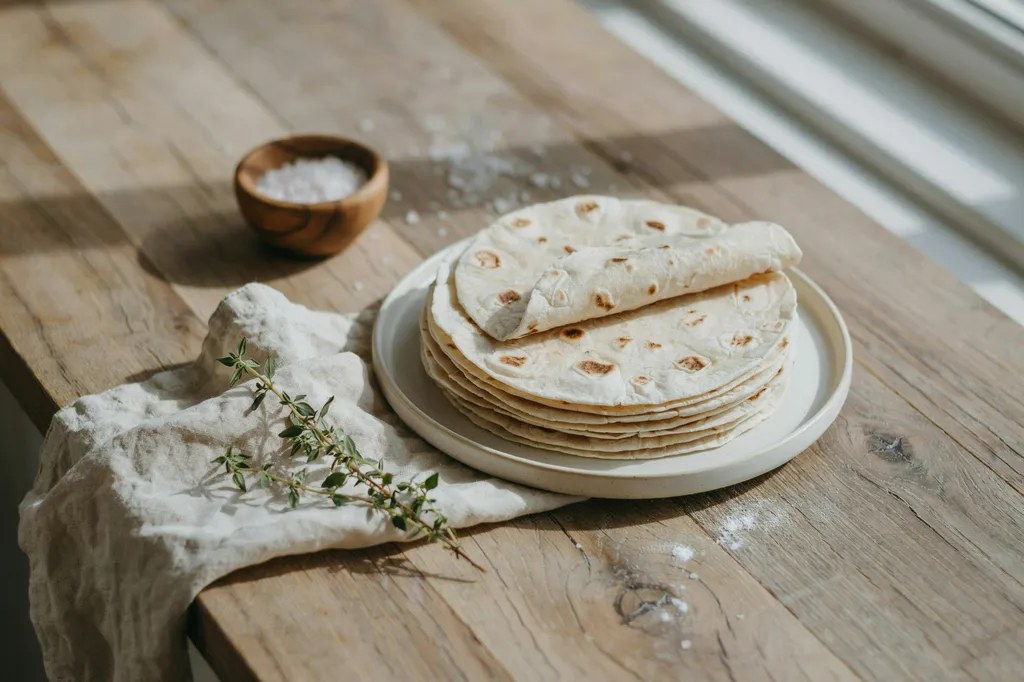
Fresh Milled Flour Tortillas
Fresh milled flour tortillas put store-bought to shame. The dough takes 10 minutes, no yeast, no proof — just mix, rest 30 minutes, roll, and griddle. The result is a soft, pliable tortilla with real wheat flavor that wraps without cracking. The key to soft tortillas is a small amount of fat and hot (not boiling) water. The fat coats the proteins and prevents toughness; hot water relaxes the dough so it rolls thin without springing back. Lard is traditional and best, but butter or neutral oil work well. Keep the heat moderate and don't overcook. Tortillas should puff slightly, develop a few brown spots, and remain flexible. Stack and wrap in a towel as you go so they steam soft. Makes 8 tortillas.

Christmas Bread
This braided Christmas bread is a centerpiece loaf — slightly sweet, lightly spiced, beautifully shaped, and welcome on any holiday table. Less assertive than stollen, more polished than dinner rolls, it splits the difference and pairs equally well with breakfast butter and Christmas dinner. The dough is a classic enriched bread: milk, eggs, butter, sugar. Cardamom and orange zest provide a holiday warmth without being overpowering. A 4-strand braid sounds intimidating but is genuinely simple — see the step-by-step instructions. Brush twice with egg wash for the deepest, most golden crust, and finish with pearl sugar for festive crunch.

Christmas Stollen
Stollen is one of the great Christmas breads — a German tradition dating to at least the 14th century. The loaf is dense, buttery, soaked with rum-plumped fruit, wrapped around a log of marzipan, and finished with a thick coating of butter and powdered sugar that protects it for weeks of holiday slicing. This is the project bake of the season. Plan to make it 5–7 days before you want to serve it: stollen genuinely improves with rest. The flavors meld, the butter coating sets, and the crumb develops the slightly drier, denser character that defines the bread. Fresh milled hard white wheat gives the dough wholesomeness without overpowering the rich fillings. Soak the fruit in dark rum overnight — the alcohol mostly evaporates during baking but the flavor stays.

Gingerbread Loaf
Gingerbread is the unsung holiday loaf — easier than stollen, more impressive than banana bread, and the smell alone justifies the bake. Fresh milled hard white wheat gives this gingerbread a real wholeness that white flour cannot — the wheat stands up to the assertive molasses and spice instead of fading into the background. This is a classic dark gingerbread: heavy on molasses, generous with spice, finished with a dusting of powdered sugar. Slice thick and serve with a dollop of whipped cream or lightly sweetened mascarpone for the holiday table. Plain with butter and a cup of coffee for breakfast on Boxing Day.
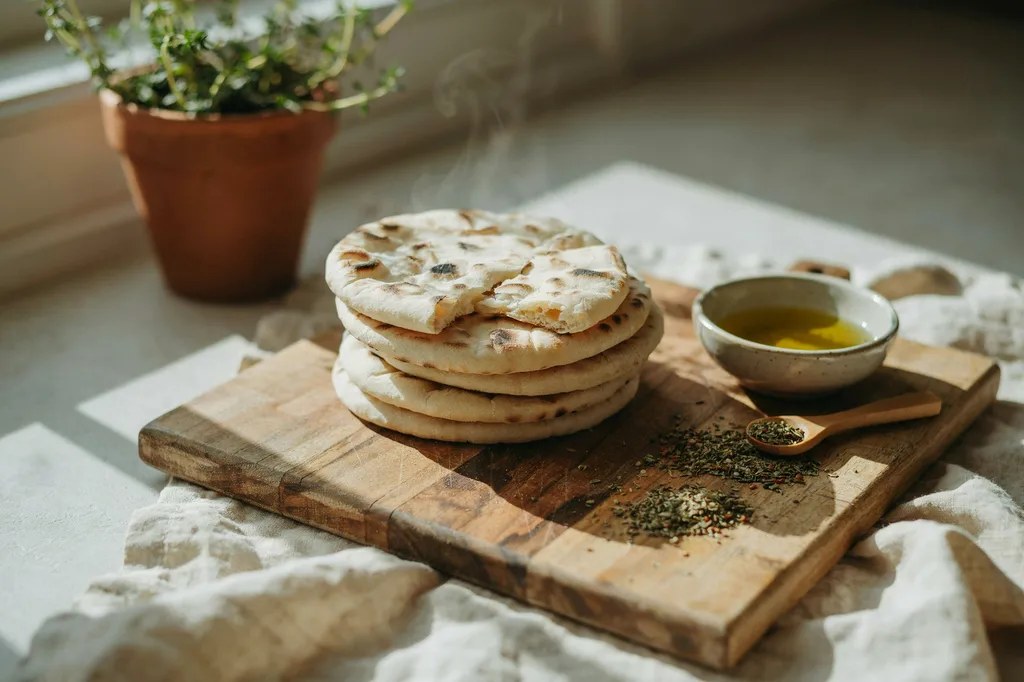
Fresh Milled Pita Bread
Pita is one of the great breads to bake at home: fast, flexible, and dramatic. The moment a thin disk hits a 500°F surface and balloons into a perfect pocket is one of the most satisfying sights in baking. Fresh milled hard white wheat makes pita that store-bought cannot match — sweet, nutty, soft, and substantially more flavorful. The dough comes together in one bowl, ferments once, and bakes in 3 minutes per round. Make a batch on Sunday for sandwiches all week. The pocket comes from steam expanding rapidly in a sealed, thin disk. Three things make it work: a fully preheated baking surface (steel, stone, or heavy upside-down sheet pan), even rolling, and not pricking or damaging the surface. If your first pita doesn't puff, increase oven temperature and roll thinner.
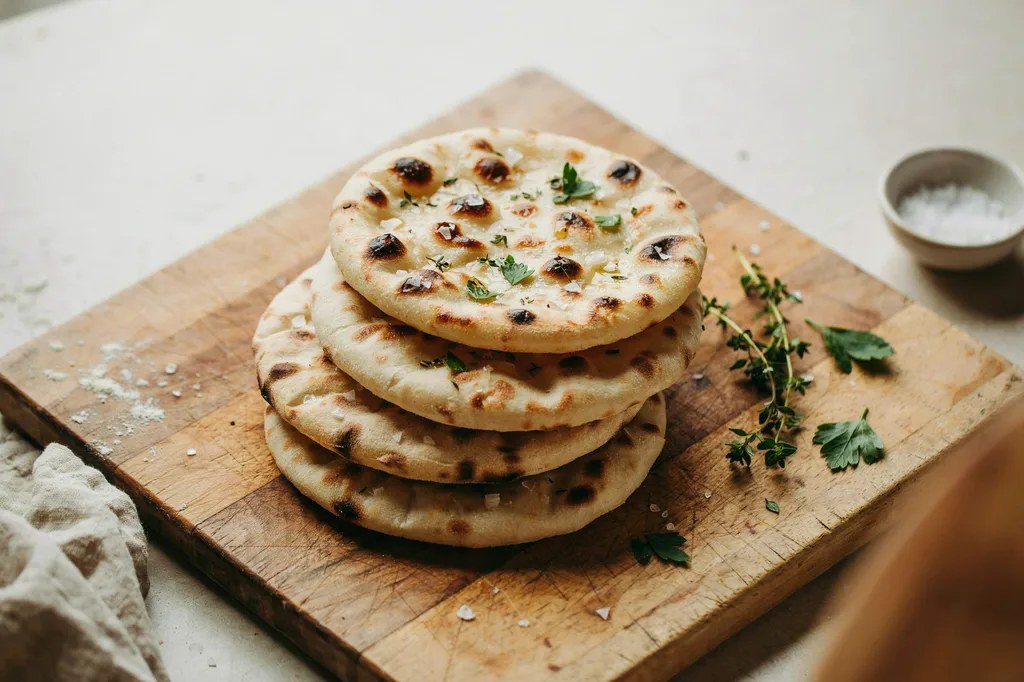
Fresh Milled Flatbread
Every fresh milled kitchen needs a weeknight flatbread. This is mine: a single-rise dough, dimpled with fingertips, drizzled with olive oil, scattered with herbs and flaky salt. It bakes flat with crispy edges and a soft interior, the perfect partner for hummus, baba ganoush, or a Sunday soup. The dough is straightforward: flour, water, yeast, olive oil. Hydration sits at 70% — enough to give an open, slightly chewy crumb without making rolling impossible. A 60-minute autolyse before adding yeast and salt softens the bran and gives you a much tenderer crust. Makes 4 personal-sized flatbreads.
Related Content
Recommended Grains
Related Techniques
How to Autolyse Fresh Milled Flour
Combine flour and water and let it rest before adding yeast and salt. Bran softens, gluten develops passively, and the final dough is dramatically easier to handle.
How To Build Gluten With Fresh Milled Flour
Gluten development in fresh-milled flour is a different craft than in commercial white flour. White-flour doughs love aggressive kneading, slap-and-folds, and stand mixers on high — the smooth endosperm forms long uninterrupted gluten strands quickly. Fresh-milled flour cannot work that way because the bran physically interrupts every gluten strand it touches. The bakers who get gorgeous open crumb out of fresh flour all do the same thing: hydrate fully, rest patiently, fold gently, and choose the right grain. This guide walks through the science and the technique.
How To Convert White Flour Recipes to Fresh Milled Flour
Most fresh-milled disasters happen on the conversion. A baker takes a beloved white-flour recipe, swaps in fresh flour cup-for-cup, follows the original times, and pulls out a dense, dry, or gummy loaf. The recipe was not the problem — fresh-milled flour simply needs five adjustments. This guide walks through the conversion in order: choose the right grain for the recipe type, swap by weight not volume, increase hydration, add an autolyse, expect faster fermentation, and watch out for the four most common conversion errors.
Fresh Milled Flour Hydration Guide
Hydration is the single variable that fixes more fresh-milled bread problems than any other adjustment. Bagged bread flour is engineered to behave predictably — milled to a uniform fine particle, aged for weeks, and stripped of the thirsty bran and germ. Fresh-milled flour is the opposite: it contains every part of the kernel, and the intact bran soaks up water slowly. The same recipe that produces a slack, sticky white-flour dough produces a dry, tight fresh-milled dough unless you increase the liquid. This guide explains why hydration matters more for fresh flour, how each grain behaves, how to read dough texture by feel, how to convert standard recipes, and how to troubleshoot the most common hydration symptoms.